AI-Design
Relationships between
Generating Evaluating Testing
in Product Design Process
The introduction of AI into the design process opens new possibilities for reconfiguring the relationship between data, generation, and evaluation, potentially leading to significant changes in the structure and sequence of the design process itself.
Here are some examples
Testing while designing.

1_Computationally reconstruct the target

2_Use the extracted data to generate images.

3_Semantically test the generated concepts.

4_Conduct initial technical tests and development.

5_Developing 3D and first physical-formal tests.
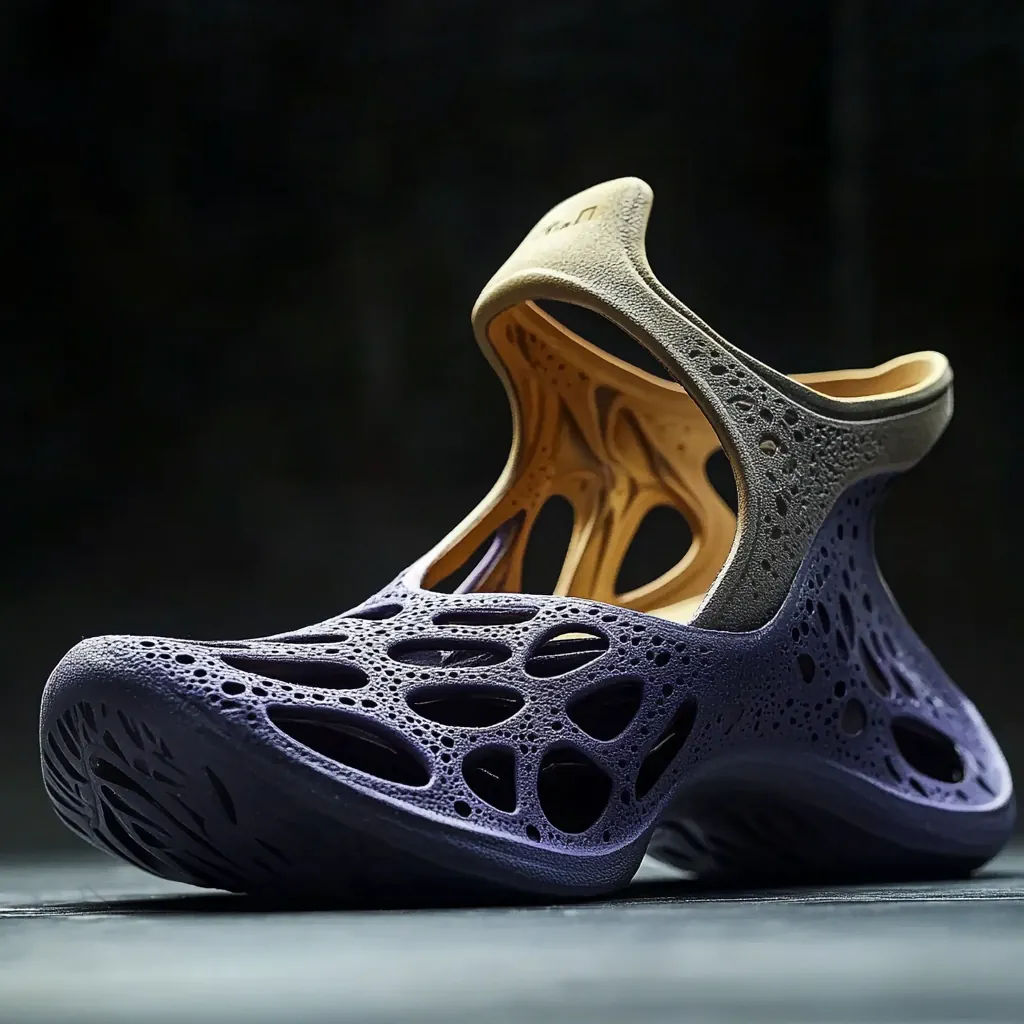
Application to real products
My experience with Artop Design Group


Some upcoming Frontiers
Netflix
Media

Netflix uses continuous user data and AI to dynamically design personalized interface content and presentation in real time.
Verganti, R., Vendraminelli, L., & Iansiti, M. (2020). “Innovation and Design in the Age of Artificial Intelligence.” Journal of Product Innovation Management

Shein
Online Fashion

SHEIN uses real-time market data, algorithmic trend detection and micro-batch production to test designs with actual customers and rapidly scale only those showing demand.
Kuang, A., Yeung, G., Wang, M., & Tong, Y. (2024). “Digital Platform, Spatial-Digital Fix, and the Reconfiguration of Apparel Production Networks.” Economic Geography

Leap 71
Machinery Manufacturing

LEAP 71 encodes engineering knowledge, physics, and manufacturing constraints into computational models that autonomously generate manufacturable machines directly from high-level specifications.
Isaienko, A., Chursanova, M., & Gareeva, F. (2026). “3D Printing and Computational Engineering – New Rocket Engineering Technologies.” SWorldJournal

Stanford
Research

Stanford researchers ground person-specific LLM agents in rich self-reports to simulate how real individuals respond across new attitudes, decisions, and experimental contexts.
Park, J. S., Zou, C. Q., Kamphorst, J., Egan, N., Shaw, A., Hill, B. M., Cai, C., Morris, M. R., Liang, P., Willer, R., & Bernstein, M. S. (2026). LLM agents grounded in self-reports enable general-purpose simulation of individuals (arXiv:2411.10109)
