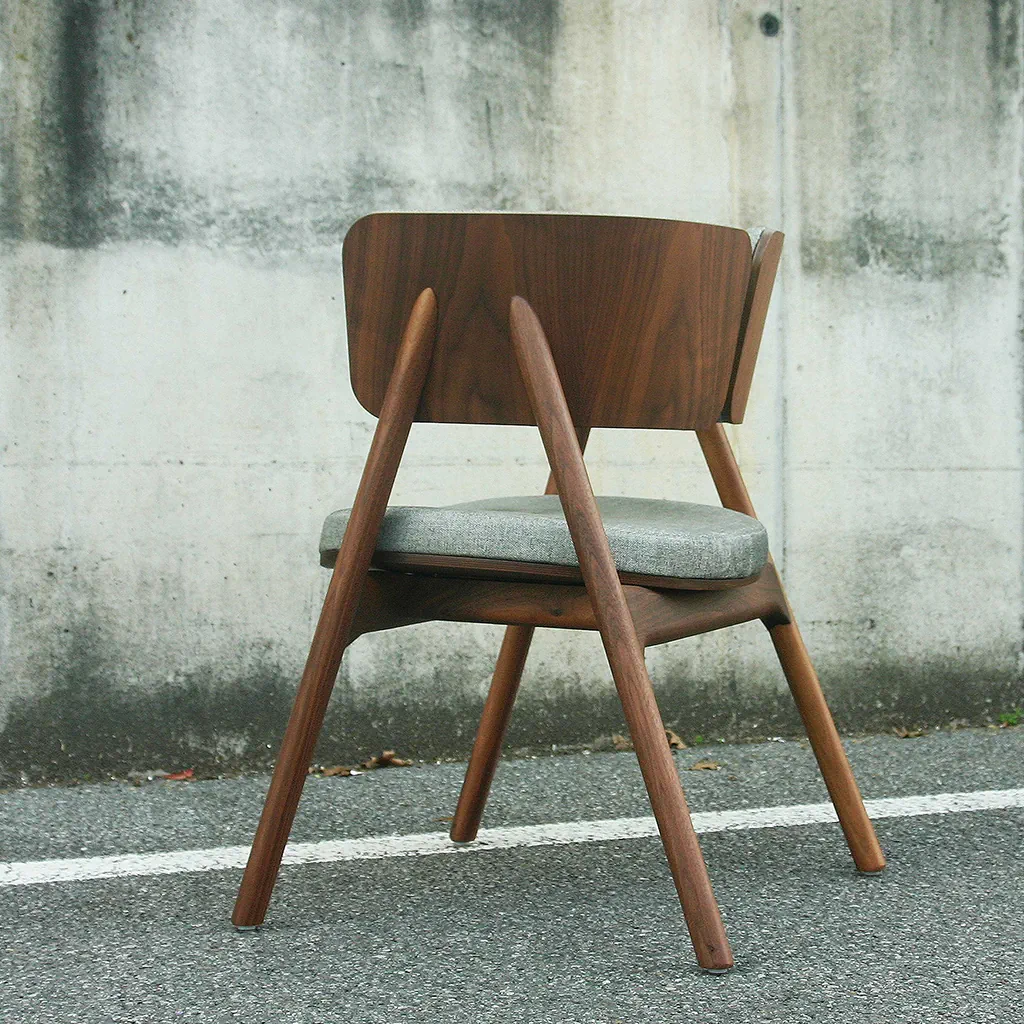
Credits: Roberto Rota — Salone del Mobile, Milano, 2018
WOOD
OO
Armchair
Category: Product
Year: 2018
Producer: Al2 →
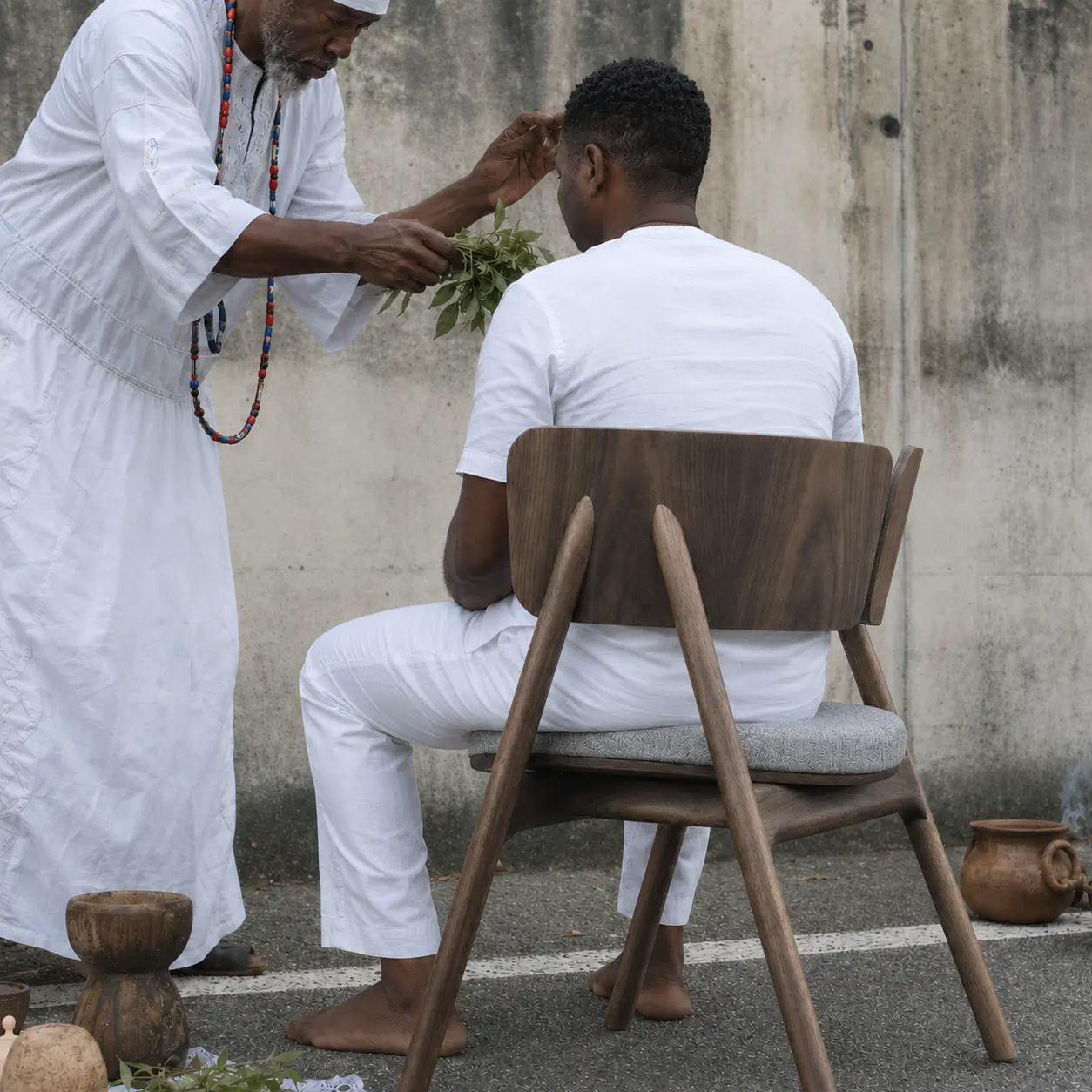
A Ritual made of Wood
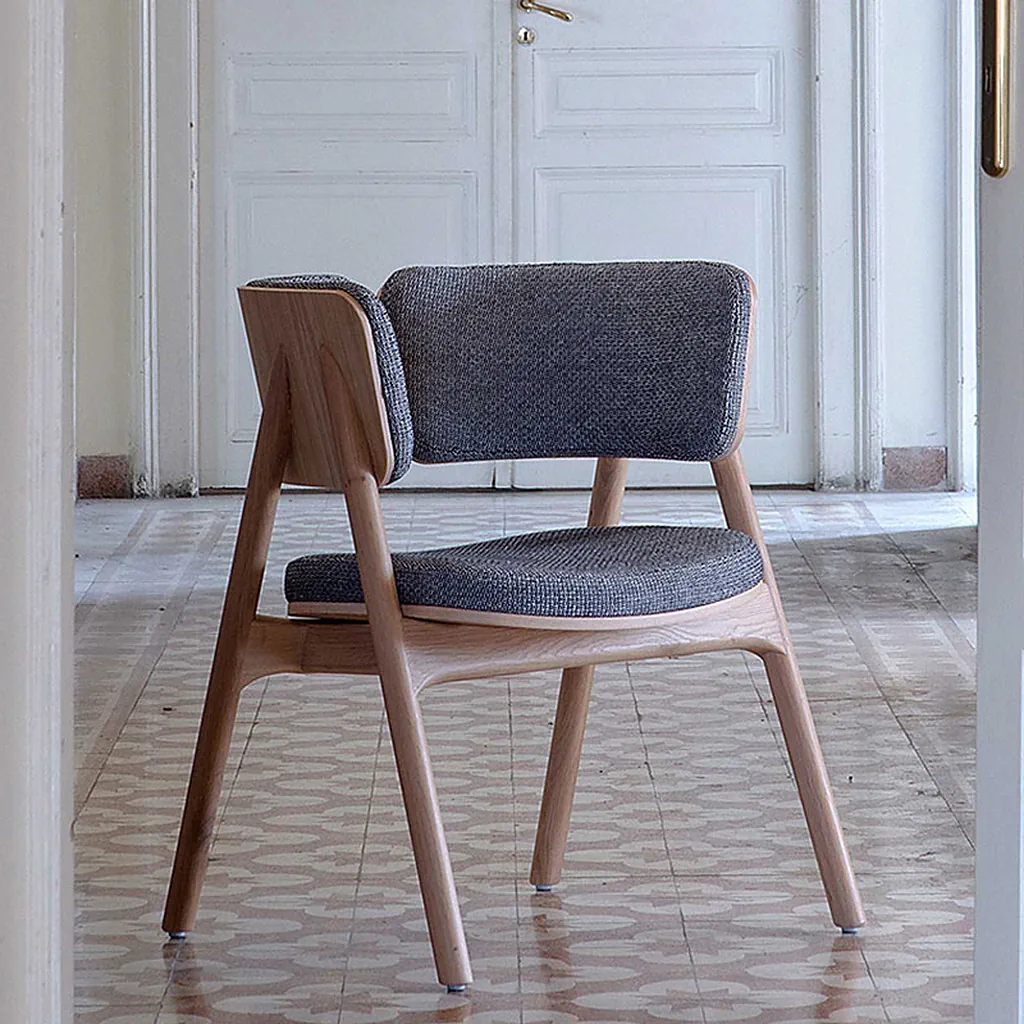
Balancing contemporary sophistication and primordial expression, Wood-oo combines CNC-machined solid wood, bent plywood and upholstered comfort. Its structural legs pierce and bind the chair’s separated backrest like protective ritual guardians, preserving their unity against separation. As part of a mystical liturgy of the daily life, it asks to be observed and touched within the framework of its living environment’s rituals.
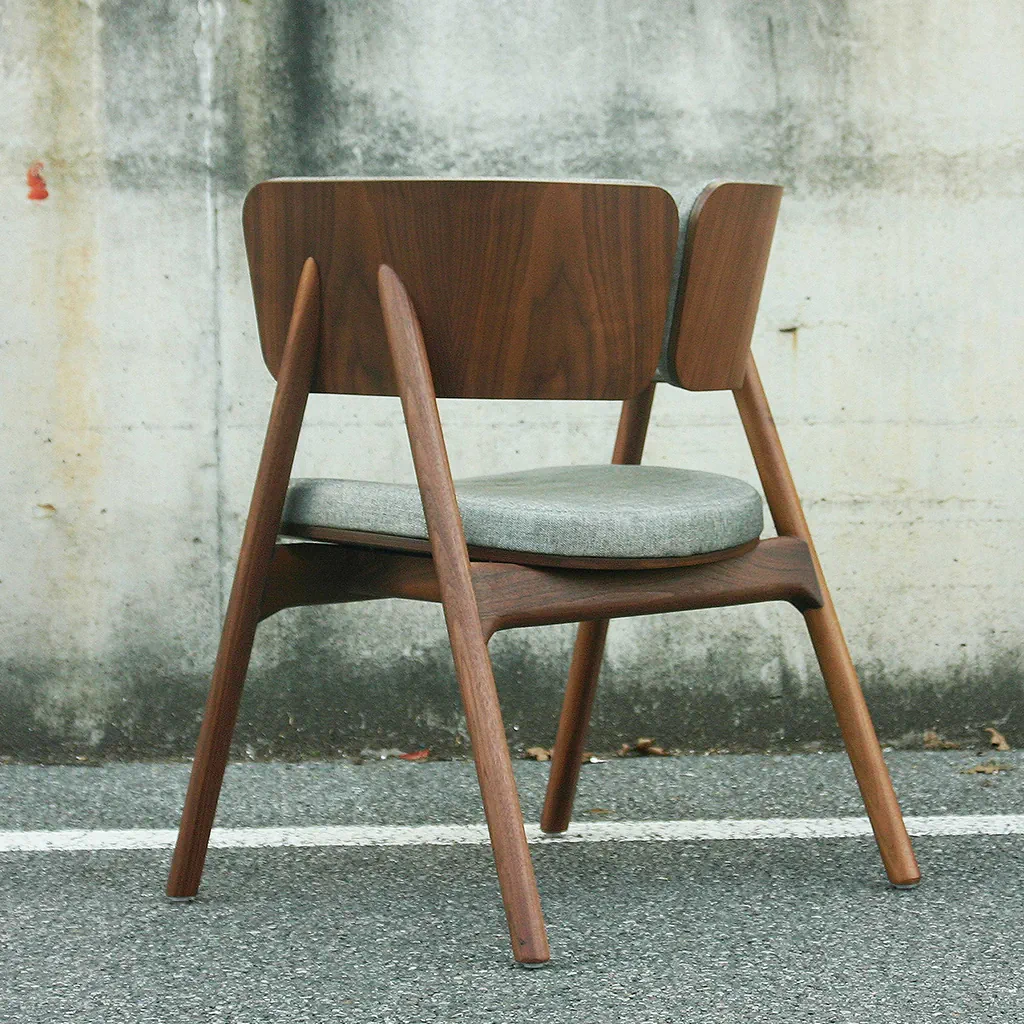
The name Wood-oo emerges from the encounter between wood and Vodun. Wooden posts pass through the separate sections of the seat, holding them in relation and preventing distance from becoming disintegration. Construction acquires a symbolic meaning: piercing to protect, binding without erasing separation, and preserving through structure.

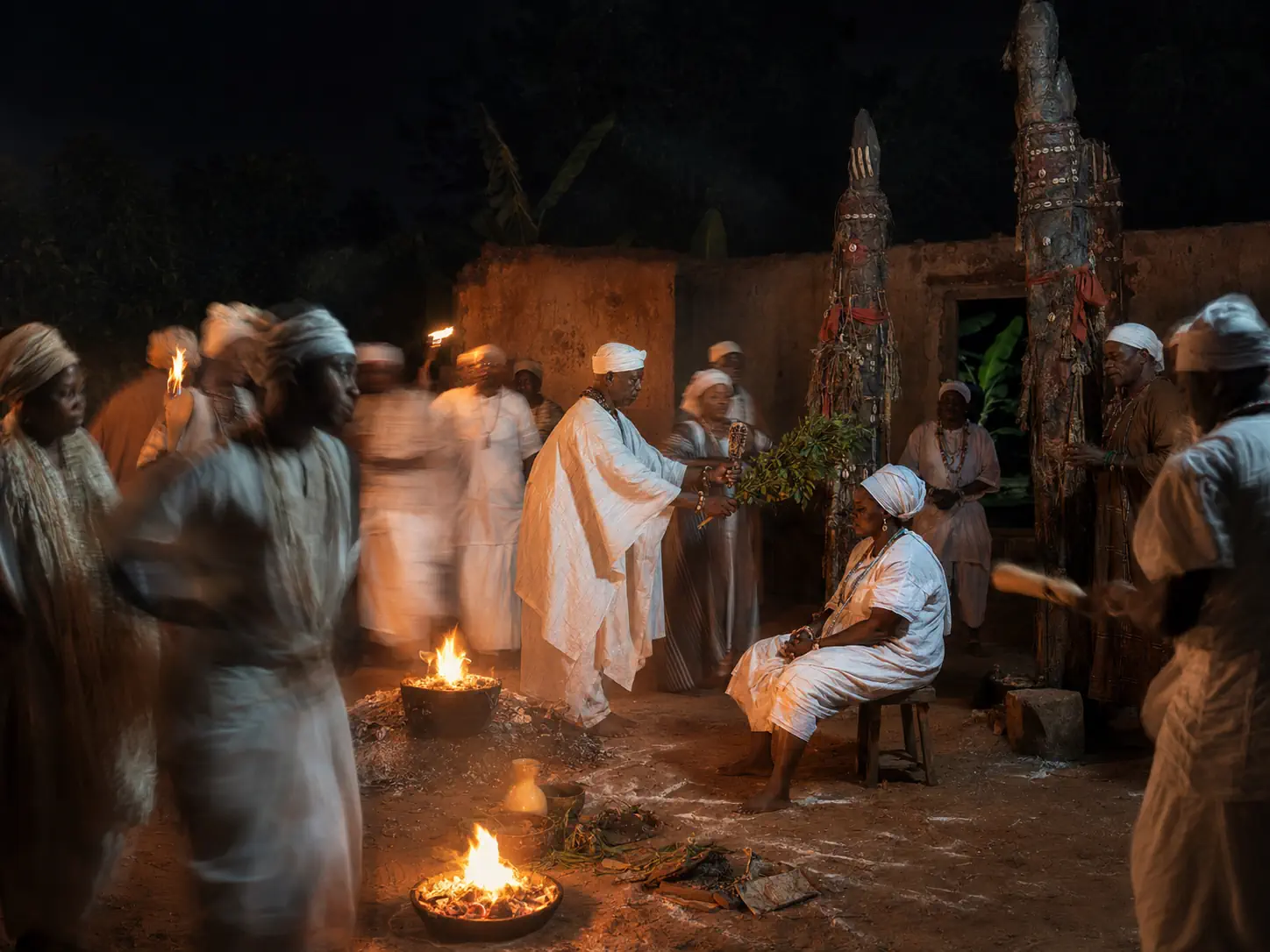
Wood-oo Armchair and Vodun
A distinction must be made between West African Vodun and Haitian Vodou. The two traditions are historically connected, but developed within different cultural and historical contexts.
Vodun is practised, with many local variations, principally among Fon, Ewe, Aja and neighbouring communities in Benin, Togo, Ghana and Nigeria. Haitian Vodou developed through the reconfiguration of West and Central African religions within Haiti’s colonial and postcolonial history.
Wood-oo Armchair primarily refers to the material culture of African Vodun and, more specifically, to the protective posts and power figures known as bocio or kudio-bocio.
ANTHROPOLOGICAL BACKGROUND
Vodun as a Relational System
Vodun is not simply a cult involving objects believed to possess magical powers. It is a religious and social system in which people, ancestors, divinities, territories, substances, words and ritual actions are placed in relation. Its practices may concern:
- the protection of individuals and communities;
- the preservation of health and equilibrium;
- the safeguarding of families;
- the management of conflicts and transgressions;
- fertility and genealogical continuity;
- relationships with ancestors and divinities;
- the restoration of a disrupted order.
Ritual objects are not merely decorative representations. They are material nodes through which these relationships are established, maintained and made operative.
Bocio: Bodies of Power
The bocio—also transcribed as bochio, botchio or bôcyɔ—are power objects associated particularly with Fon Vodun and neighbouring traditions. One commonly cited etymology relates:
- bo to power, a formula or an efficacious substance;
- cio to a dead body or corpse.
The term may therefore identify an initially inert body transformed into a ritual agent through substances, bindings, words, offerings and consecration. A newly carved bocio is not necessarily considered effective. It initially constitutes a material support that must be activated by a ritual specialist and assigned a specific purpose: protecting a person, guarding a home, detecting a transgression, diverting a threat or restoring equilibrium.
Kudio-Bocio: Protective Posts
Kudio-bocio are elongated wooden bodies or figures, often resembling anthropomorphic posts, planted directly in the ground. They may be positioned:
- near the entrance to a home;
- along the boundaries of a property;
- within passageways;
- inside a domestic courtyard;
- at the edge of a neighbourhood;
- near a shrine.
Their position is not incidental. The post occupies a threshold, making perceptible the distinction between inside and outside, belonging and estrangement, safety and danger. It may symbolically operate as:
- a sentinel, guarding a place;
- a filter, regulating what can cross a threshold;
- a substitute body, intercepting a threat directed towards a person;
- a repository of power, containing ritual substances and formulas;
- an agent of order, safeguarding familial or communal cohesion.
DESIGN MORPHOGENESIS
Protective Archetype
The process begins with the kudio-bocio: wooden posts and figures planted in the ground near homes, entrances and boundaries. Their presence defines a protected threshold and makes the act of safeguarding materially perceptible.
In the project, the ritual figure is progressively stripped of its anthropomorphic features and reduced to its essential principle: a wooden element capable of guarding, intercepting and protecting.
Protective post → Structural post → Legs
Piercing as Protection
Piercing is not interpreted as an aggressive act. The post enters the material to stabilise it, passing through the separate parts of the seat and preventing them from moving further apart.
The point of penetration becomes the place where structural and symbolic functions coincide: the post supports because it passes through, and protects because it holds.
Piercing → Holding → Safeguarding
Safeguarded Unity
The two loops remain distinct even after assembly. Their difference is not eliminated but transformed into a stable relationship through the posts that traverse them.
The resulting unity is therefore not based on homogeneity or fusion, but on structurally protected coexistence.
Separation → Binding → Structural Continuity
THE PRODUCT
Binding + Separation
The backrest consists of two distinct loops, separated by a gap that remains deliberately visible. The oblique posts forming the chair’s lateral legs pass through both parts, establishing their structural relationship.
The loops are not joined through fusion. Instead, their unity is created by the elements that traverse, hold and protect their coexistence. The chair preserves the memory of division, transforming it into a condition of balance.
WOOD-OO does not conceal separation: it safeguards it and prevents it from becoming rupture.
A Protective Structure
The prominent wooden posts-legs that pass through and hold together the separated parts of the backrest symbolically evoke the apotropaic and safeguarding function of protective posts within West African Vodun traditions.
Like kudio-bocio, they act as more than supports. They intercept separation, retain the parts and safeguard their integrity. They bind what might otherwise come apart, protect the structure from disintegration and restore a condition of equilibrium.
The chair thus becomes a symbolically protected body: an object in which the constructive act of holding together assumes the meaning of care, defence and preservation.