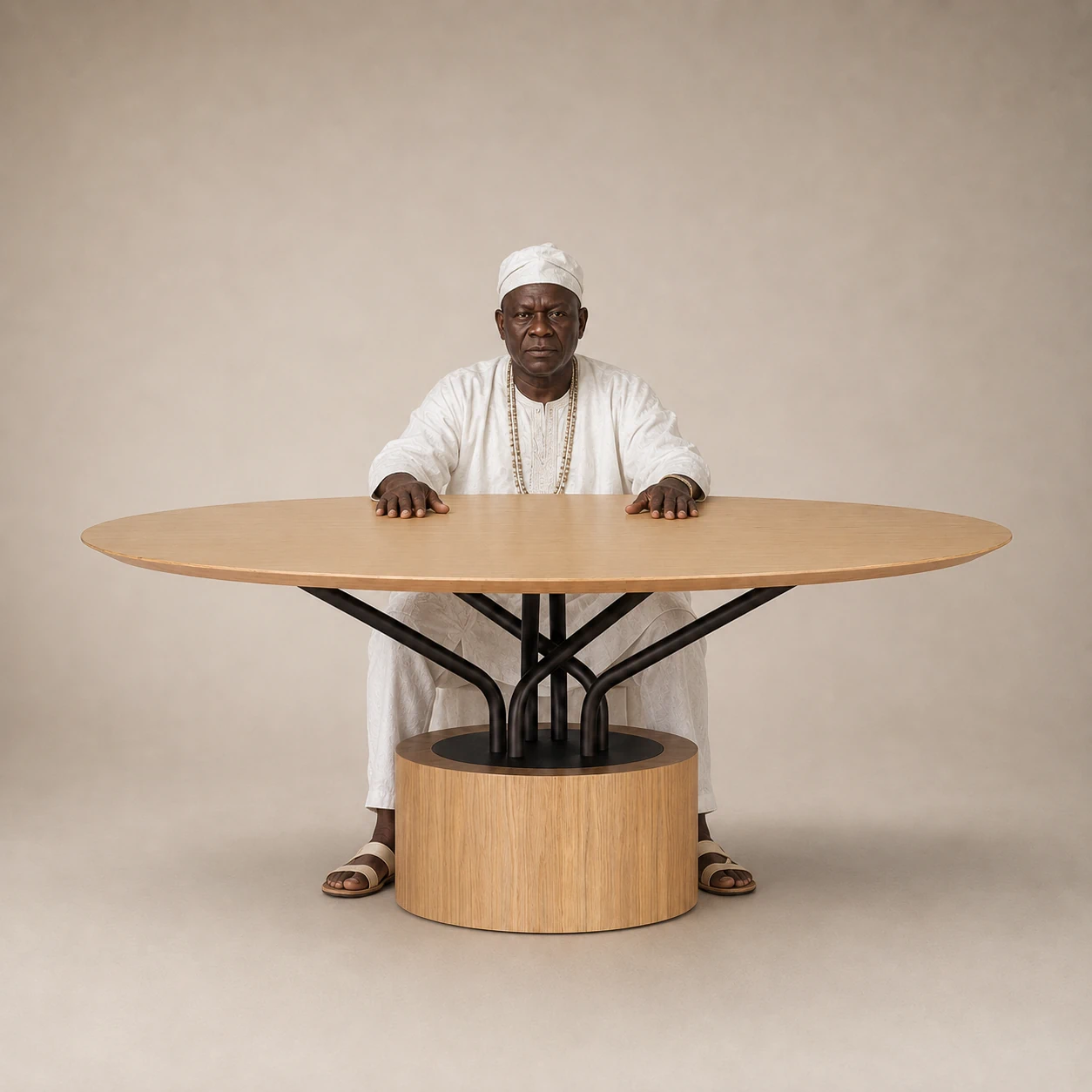
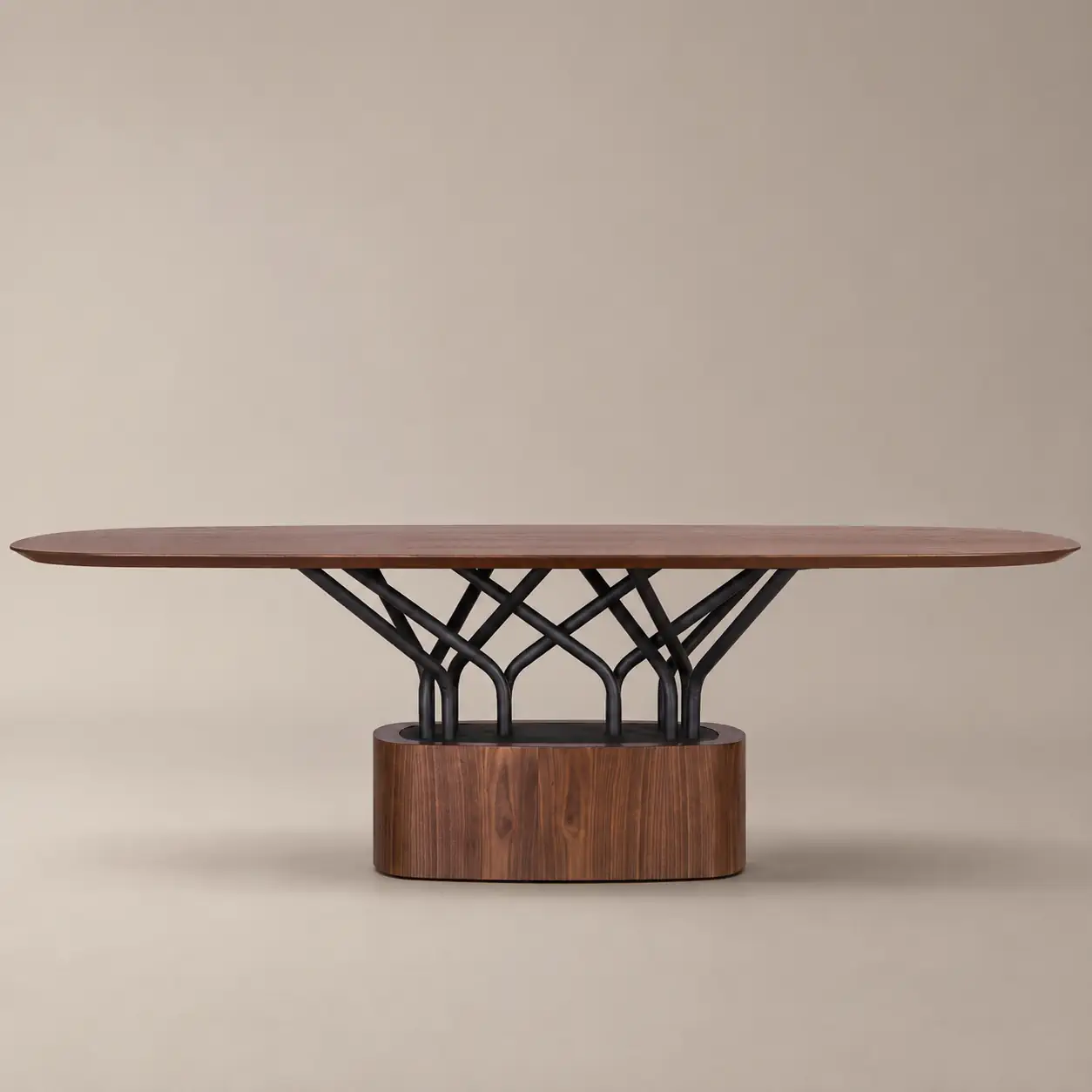
Wood-oo Oval Dining Table
In the center of the world
for Al2↵
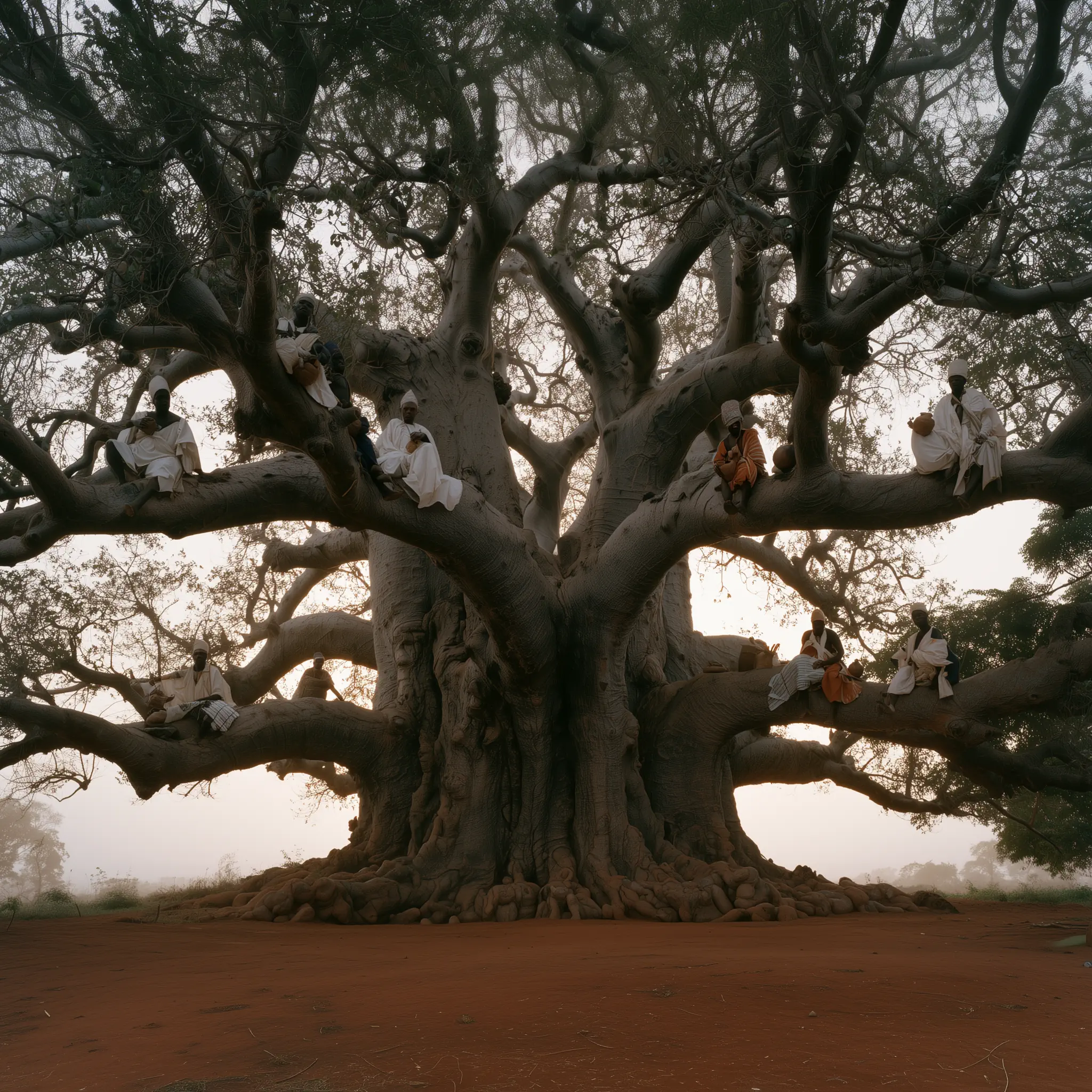
“In the center of the world there is a tree. Planted with roots in the heart of the Earth. And the branches toward the sky. A link between what is deep and what is harmony, between labyrinth and geometry, between what is mother and what is father”
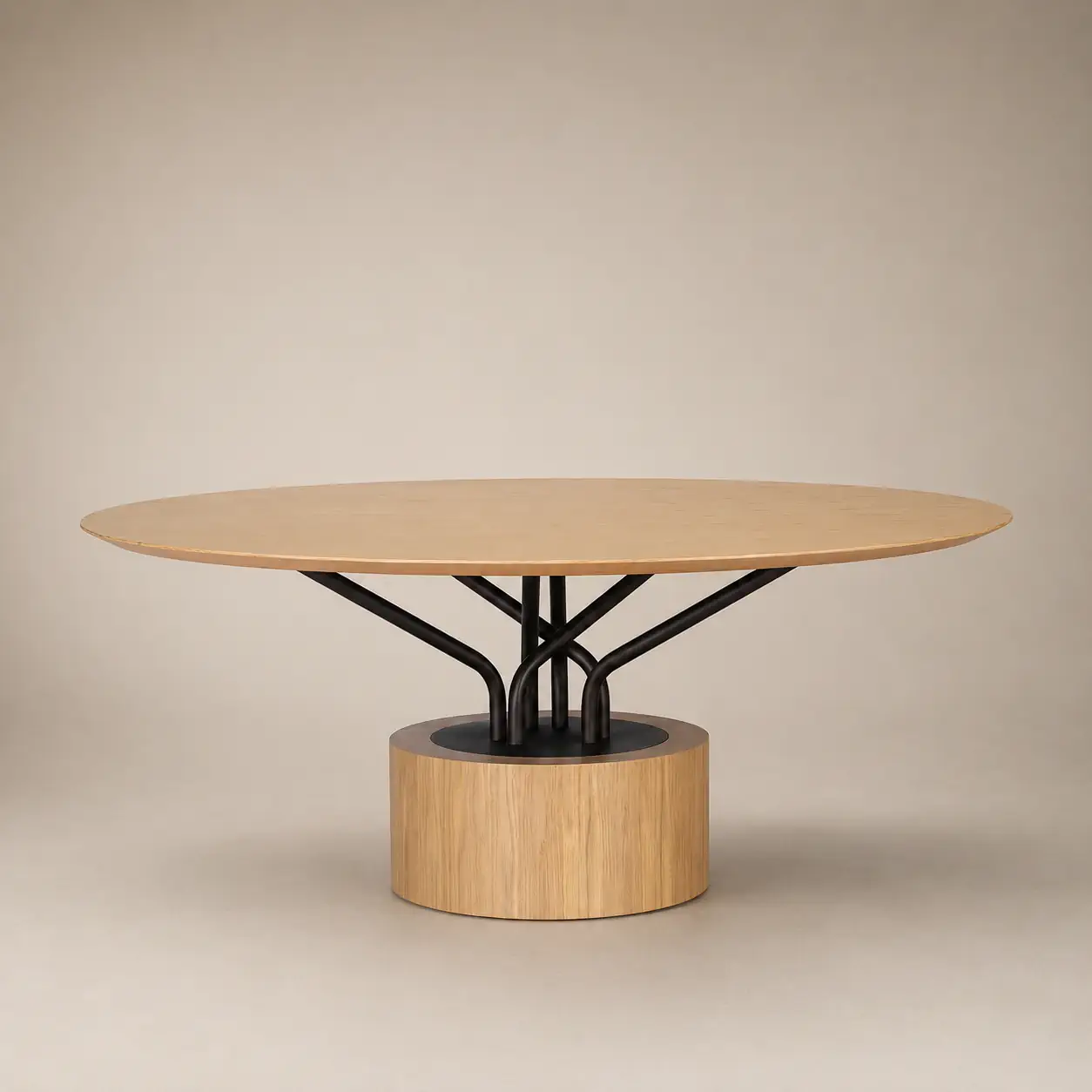
Wood-oo Round Dining Table
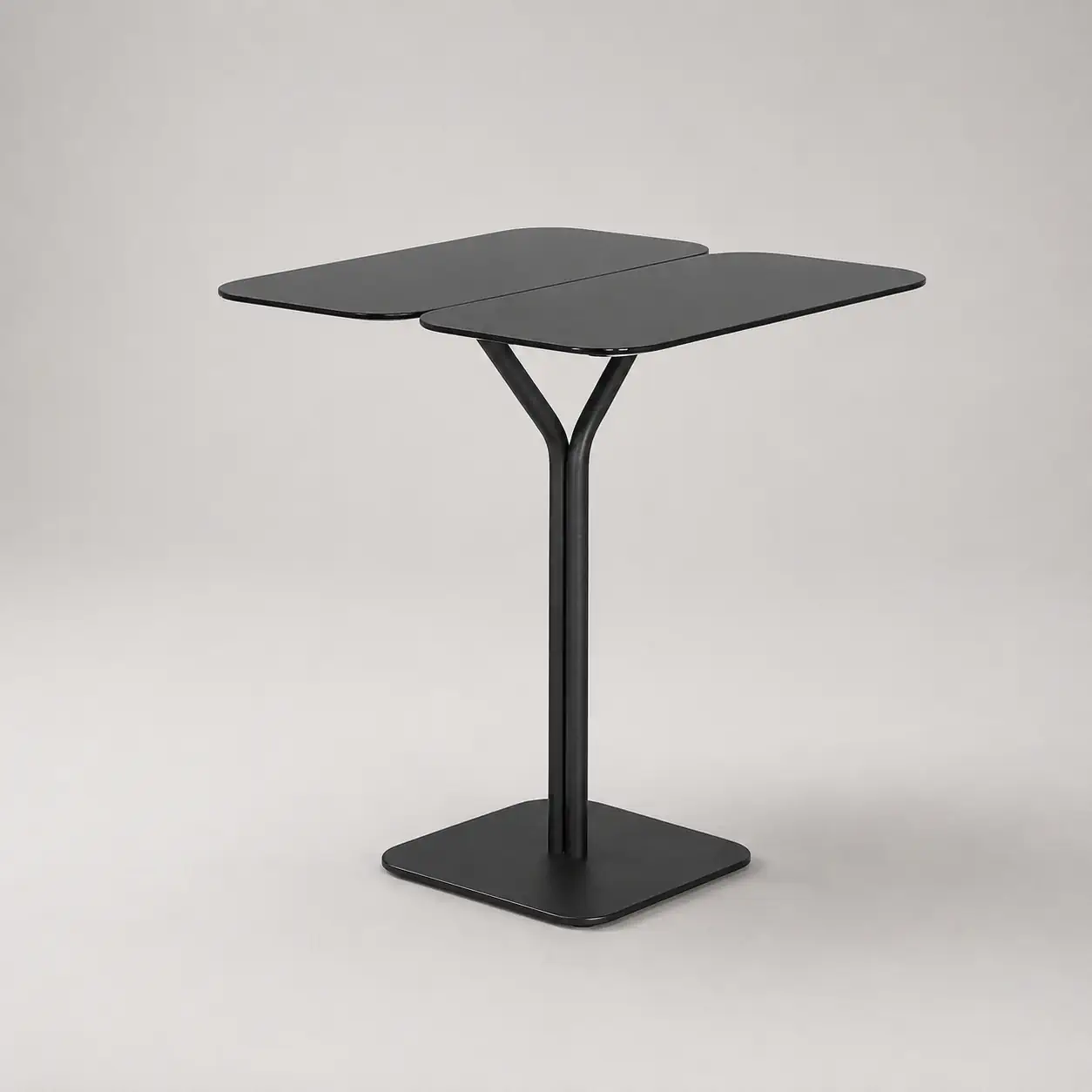
Wood-oo HoReCa Table
WOOD-OO is a family of three different tables designed for Al2, whose structure draws morphological inspiration from the baobab. A central base evokes the rooted mass of the trunk, while a repeated system of bent metal tubes expands upwards to support the tabletop. The table does not reproduce the tree literally but translates its transition from a compact base to an extended canopy.
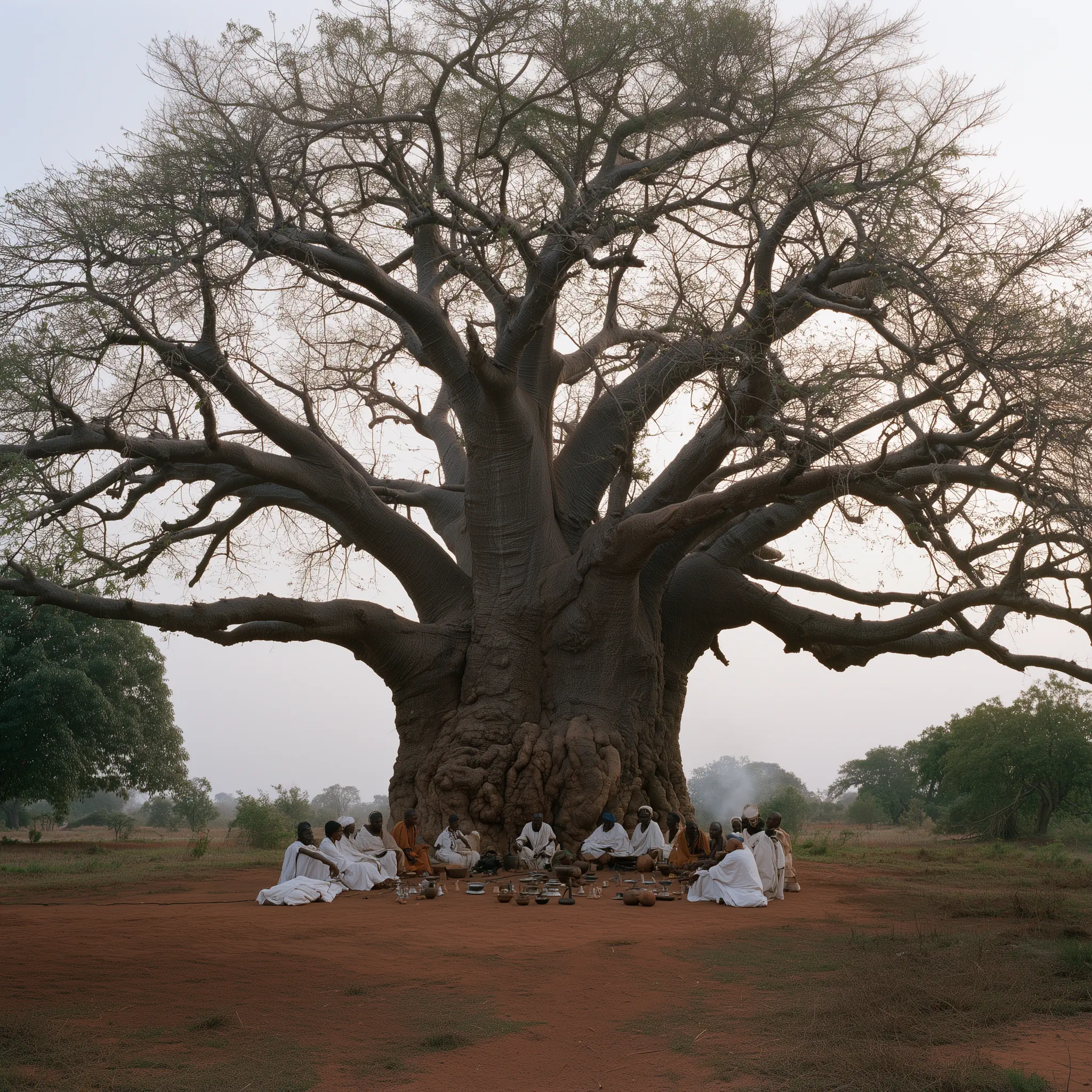
The name WOOD-OO connects wood with a reference to West African Vodun, distinct from the stereotypes associated with Western representations of “voodoo.” The baobab is not a universal symbol of Vodun. Nevertheless, individual baobabs have a documented presence within the sacred landscapes of southern Benin, including royal compounds, historical settlements and sacred forests. Their ritual significance is context-specific and may derive from associations with spirits, ancestors, lineages or historical events. The tree can therefore function as a material point of relation between community, territory and collective memory.

In southern Benin, some sacred baobabs are marked and maintained through practices such as cloth wrapping, offerings and ritual prescriptions. Baobab leaves are also documented in liturgical and purification practices. Studies of sacred trees in the region identify three recurrent functions: the containment of spiritual presence, the definition of culturally significant places and the preservation of historical memory. The project’s reference to the maternal and paternal can also be read in relation to Mawu-Lisa, the complementary female and male principles found in Fon religious thought. This is a conceptual correspondence rather than a specific symbolism attributed to the baobab.

The larger dining tables combine a metal structure with a curved-plywood wooden base. The compact HoReCa version uses a central metal support and a shaped top divided into two sections. Tops are available in oak, walnut, smoked eucalyptus, lacquer or ceramic. The metal elements are offered in different epoxy-powder finishes.
The family includes:
– an oval residential dining table, available from 180 × 110 to 280 × 120 cm;
– a round residential dining table, available in diameters from 130 to 180 cm;
– an 80 × 80 cm square table developed for restaurants, cafés and HoReCa environments.
The supporting structure is generated from a single type of bent metal tube, repeated and rotated around a central axis. This controlled variation produces a branching configuration and different visual intersections according to the viewpoint.

WOOD-OO translates selected characteristics of the baobab into a design system: a rooted base, a branching structure and an extended surface for collective use.
The cultural reference is therefore expressed through morphology and function. The table becomes a central structure around which relationships and everyday activities are organised.