As a Steppic Wooden Framework
for Al2↵
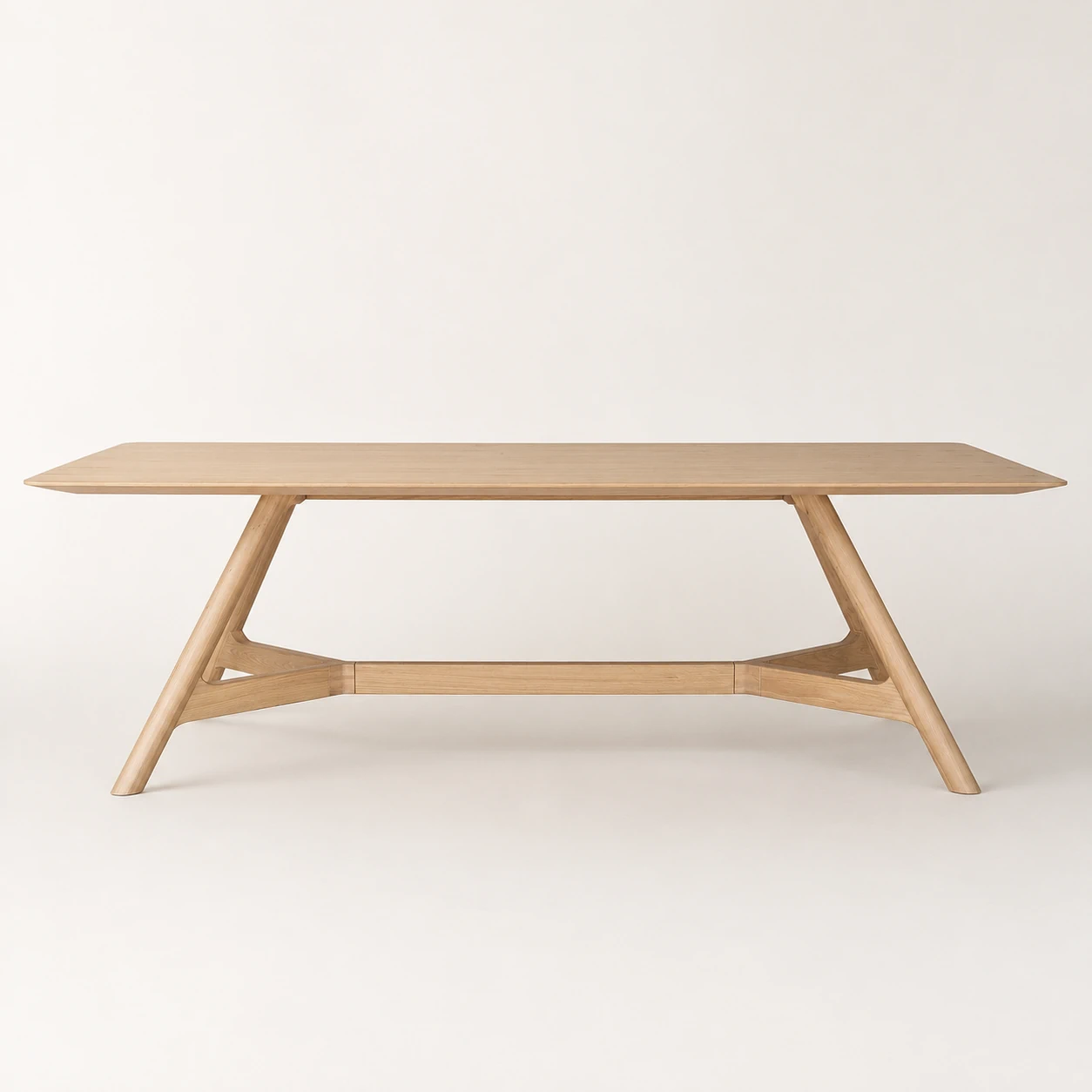
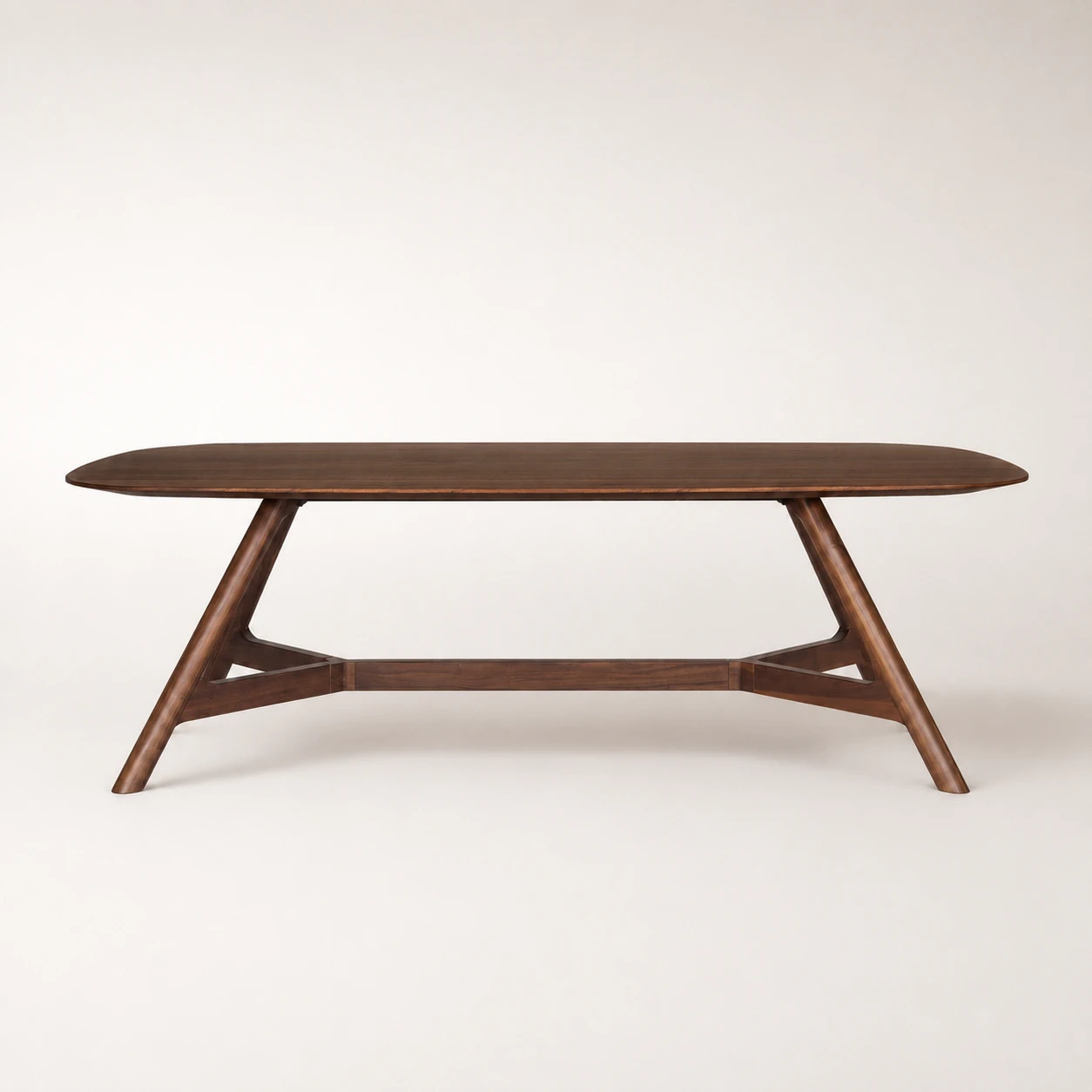
Kahal is a solid-wood table inspired by the structure of the yurt and the equestrian culture of the steppe. Its distinctive joints express a subtle dialogue between strength, movement and form.
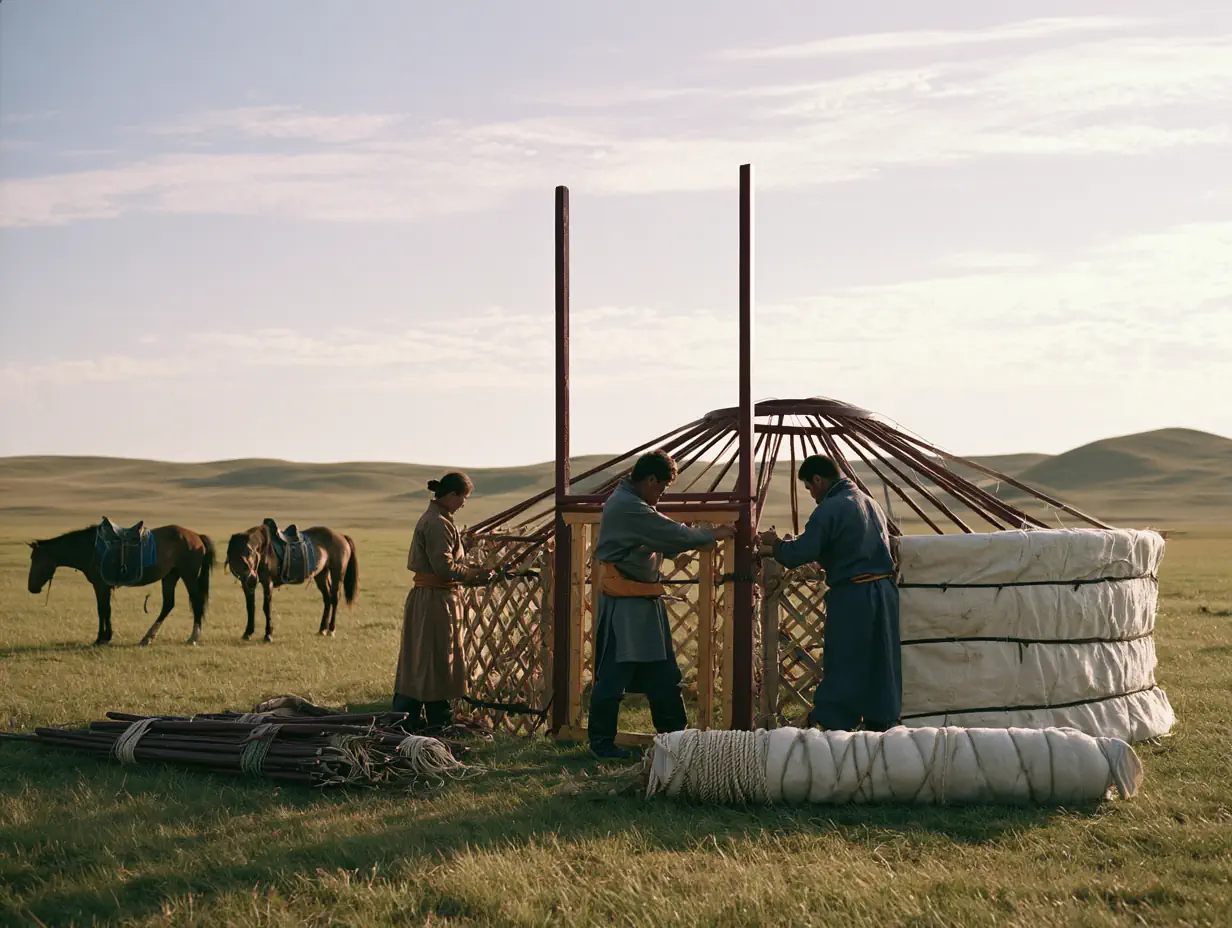
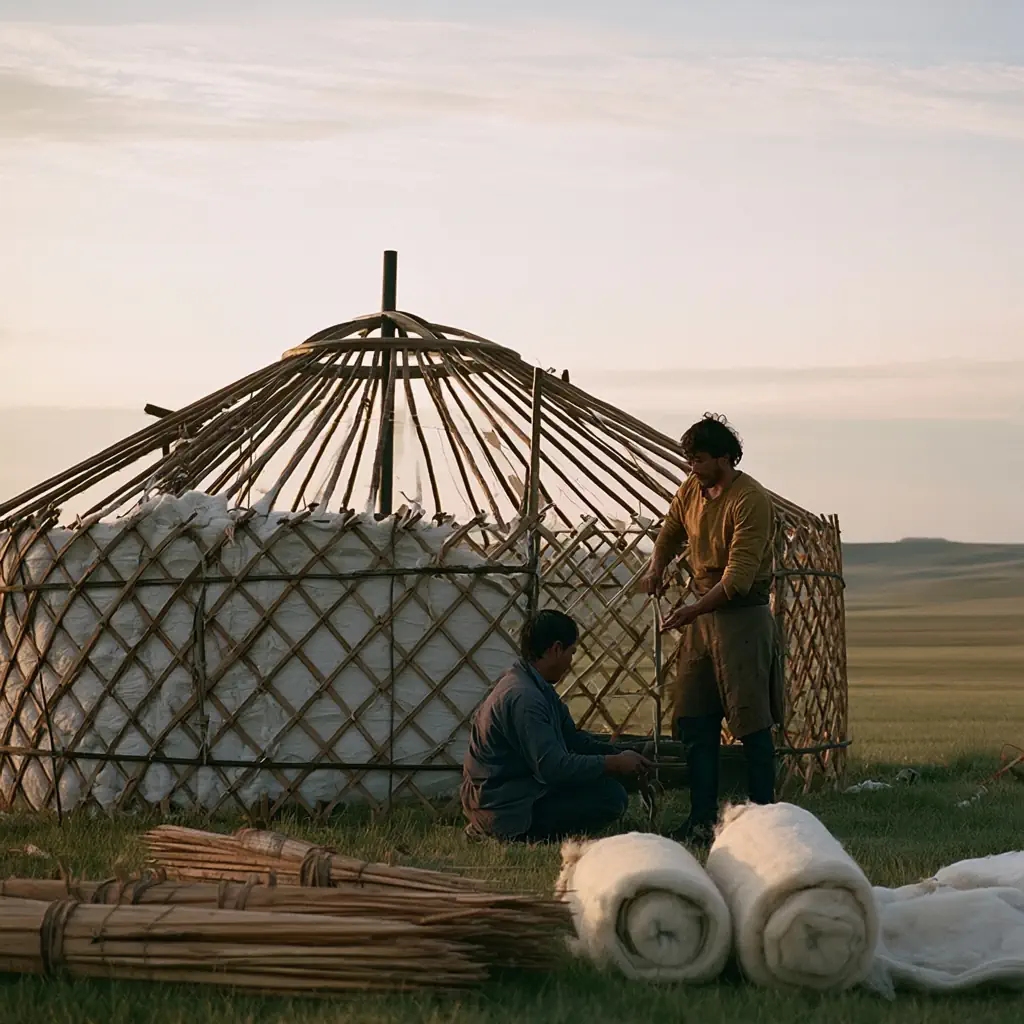
The yurt is a mobile dwelling developed by the pastoral cultures of Central Asia. In the Mongolian tradition it is known as a ger, while yurt derives from Turkic languages. Its structure begins with a circular, collapsible lattice wall. This is formed by Mongolian khana, known as kerege in Turkic traditions. The wooden sections are unfolded, curved and connected through leather or fibre ties. Stability emerges from the interaction of slender, repeated and reversible elements.
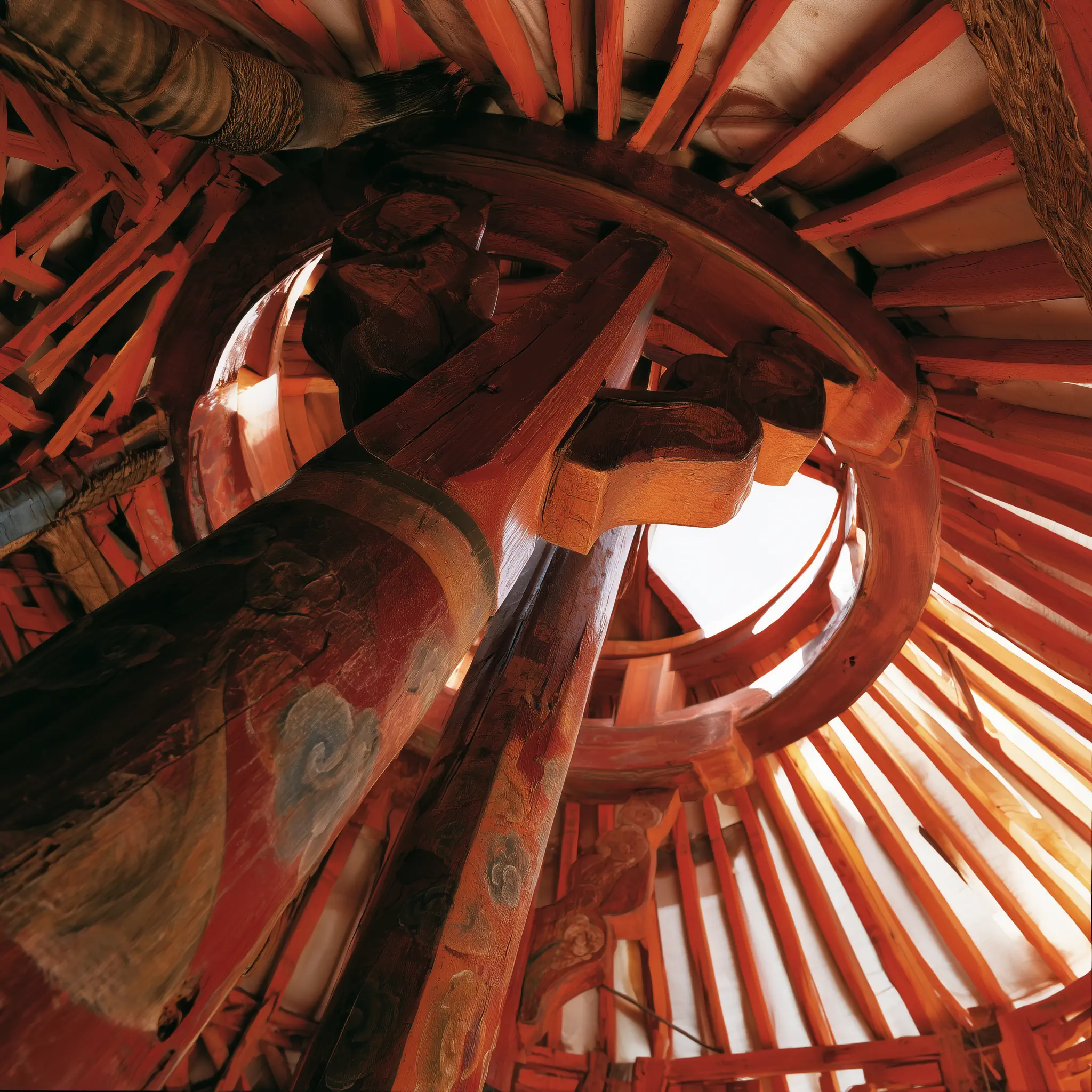
Radial roof poles called uni rise from the wall, known as uuk or uyk in Turkic traditions. They converge towards the toono, the circular crown that brings light and air into the interior. In Kyrgyz and Kazakh yurts, the crown is respectively called tündük and shanyraq. In the Mongolian ger, it may be supported by two vertical posts known as bagana. Their widened or forked upper ends receive the crown and distribute its load. Poles, supports, crown and bindings thus form a single, collaborative wooden framework.


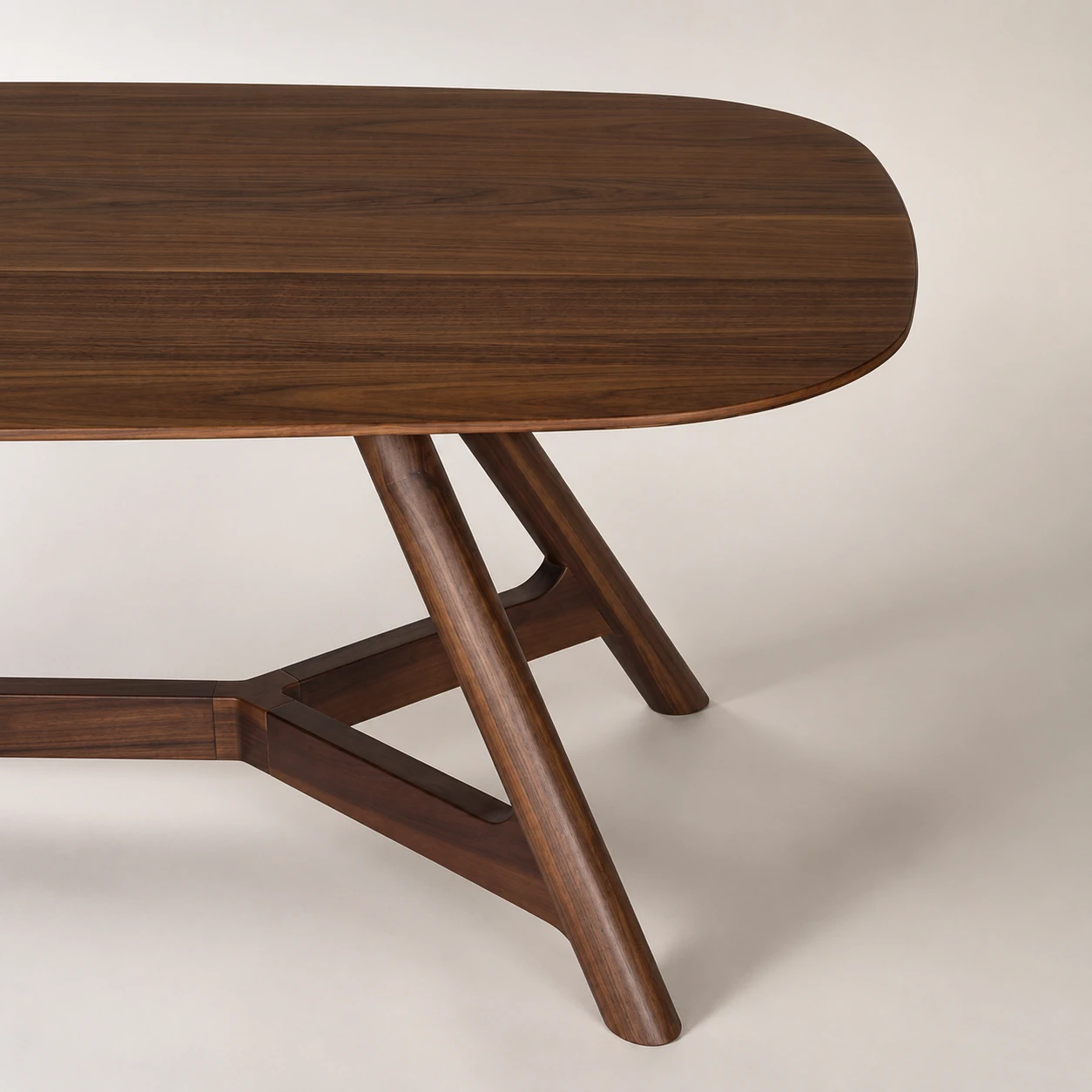
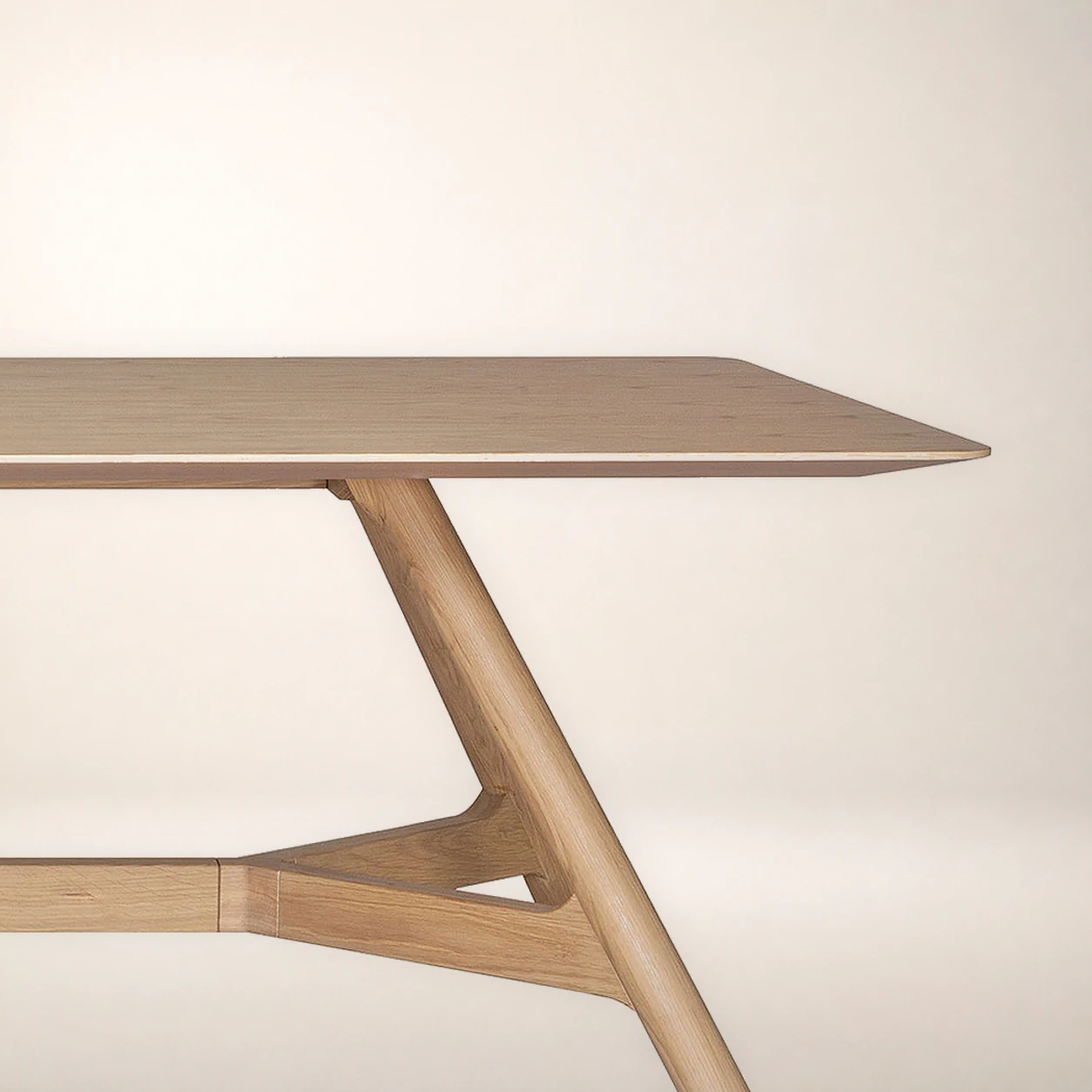
The name Kahal brings together the construction of the yurt and the equestrian culture of the steppe. The bagana supports and their forked upper connections inspire the table’s distinctive Y-shaped joints. As in the yurt, the connection is not concealed but becomes an expressive part of the structure. The form also evokes the horse, an essential presence within Turkic and Mongolian nomadic traditions. The four legs suggest limbs, while the central beam takes on the role of a spine. Architectural construction and animal anatomy thus converge within the same supporting framework.


Kahal is a rectangular dining table defined by a generous top with gently rounded corners. Its solid-wood base is organised around a substantial central longitudinal beam. At either end, bifurcated Y-shaped joints connect the beam to four inclined legs. The continuous transitions reveal how forces are transferred throughout the structure. The top is produced in wood, lacquer, ceramic, marble or combined material configurations. The precision of its joints transforms a construction detail into the table’s defining identity.
Kahal interprets the table as a structural organism, grounded yet visually dynamic.
Nomadic architecture and equine anatomy meet through the language of its connections.
Matter becomes skeleton, while the joint reveals the relationship between force and form.
