Permanent Collection
D-Bay Design Museum
Shenzhen — 2025
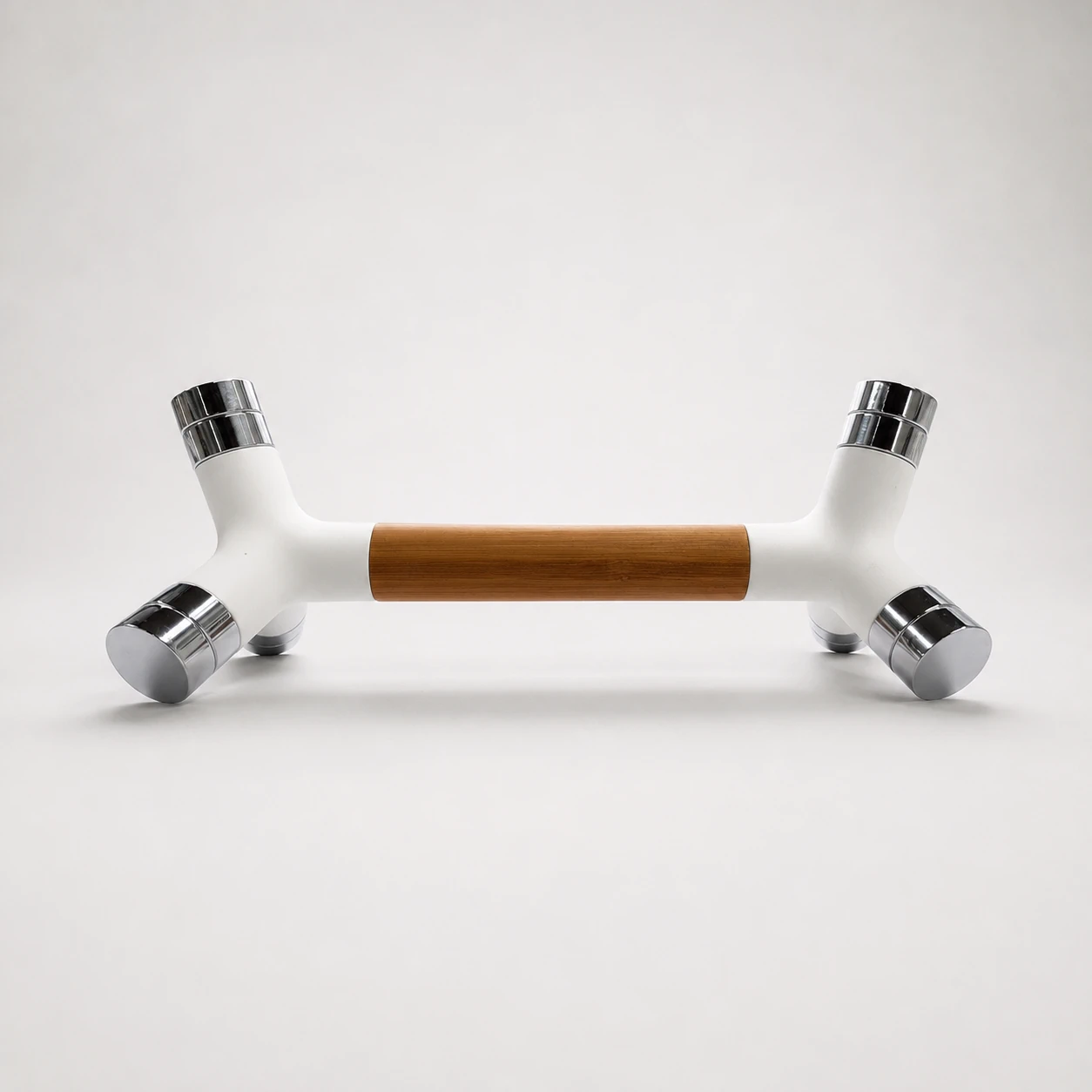
A modular dumbbell combining bamboo, aluminium and steel, allowing its dimensions and configuration to be adapted to different training needs.
Originally conceived and designed by Roberto Rota and Ate Rote for Artop Design Group, these projects were subsequently engineered and developed into physical prototypes by Artop in Shenzhen. In 2025, a selection of the prototypes was acquired by Shenzhen Bay Culture Square for the permanent collection of the D-Bay Design Museum.
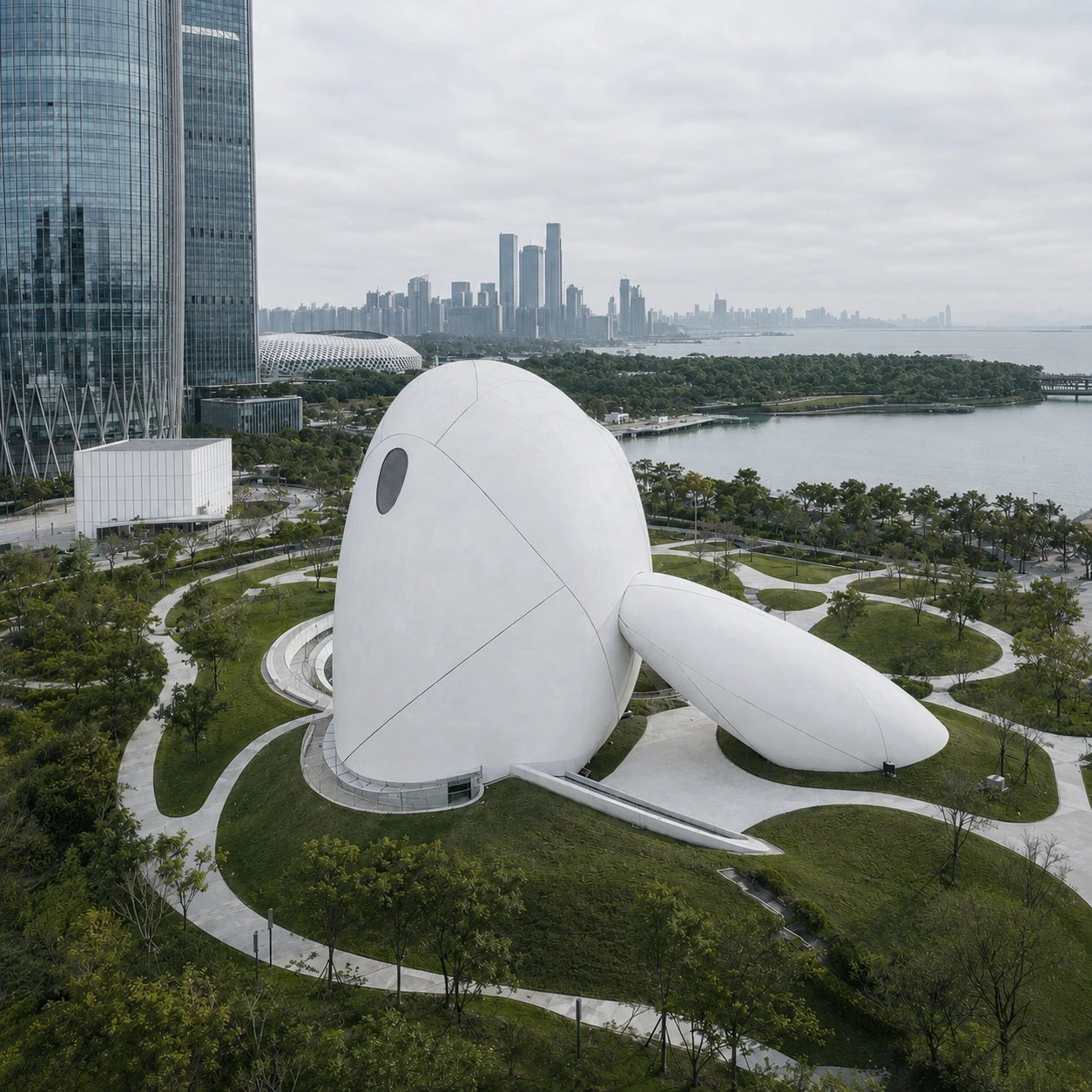
Located in Shenzhen—China’s first UNESCO City of Design—D-Bay is a major new cultural institution connecting contemporary Chinese design with an international design landscape.
The acquisition extends Ate Rote’s work-trajectory beyond industrial development, positioning it as records of an evolving dialogue between product innovation, technological culture and contemporary design in China.

The project reinterprets the dumbbell as a modular, customisable and visually essential object, conceived with particular attention to a female fitness audience. The product combines a stabilised bamboo grip, branched die-cast aluminium bodies and cylindrical weights made from chrome-plated stainless steel.
The weighting system consists of small cylinders featuring male–female threaded connections. These can be screwed together in sequence and freely combined to create different configurations, dimensions and overall weights. The white branched bodies are also connected to the handle through threaded pins, making the entire structure modular, transformable and adaptable to different training requirements.
The form draws inspiration from bamboo shoots and their branching growth pattern: elements that diverge organically from a central stem, translating a natural principle of growth into a technical structure. The result pursues an allusive minimalism in which function, material and botanical reference converge without becoming literal.
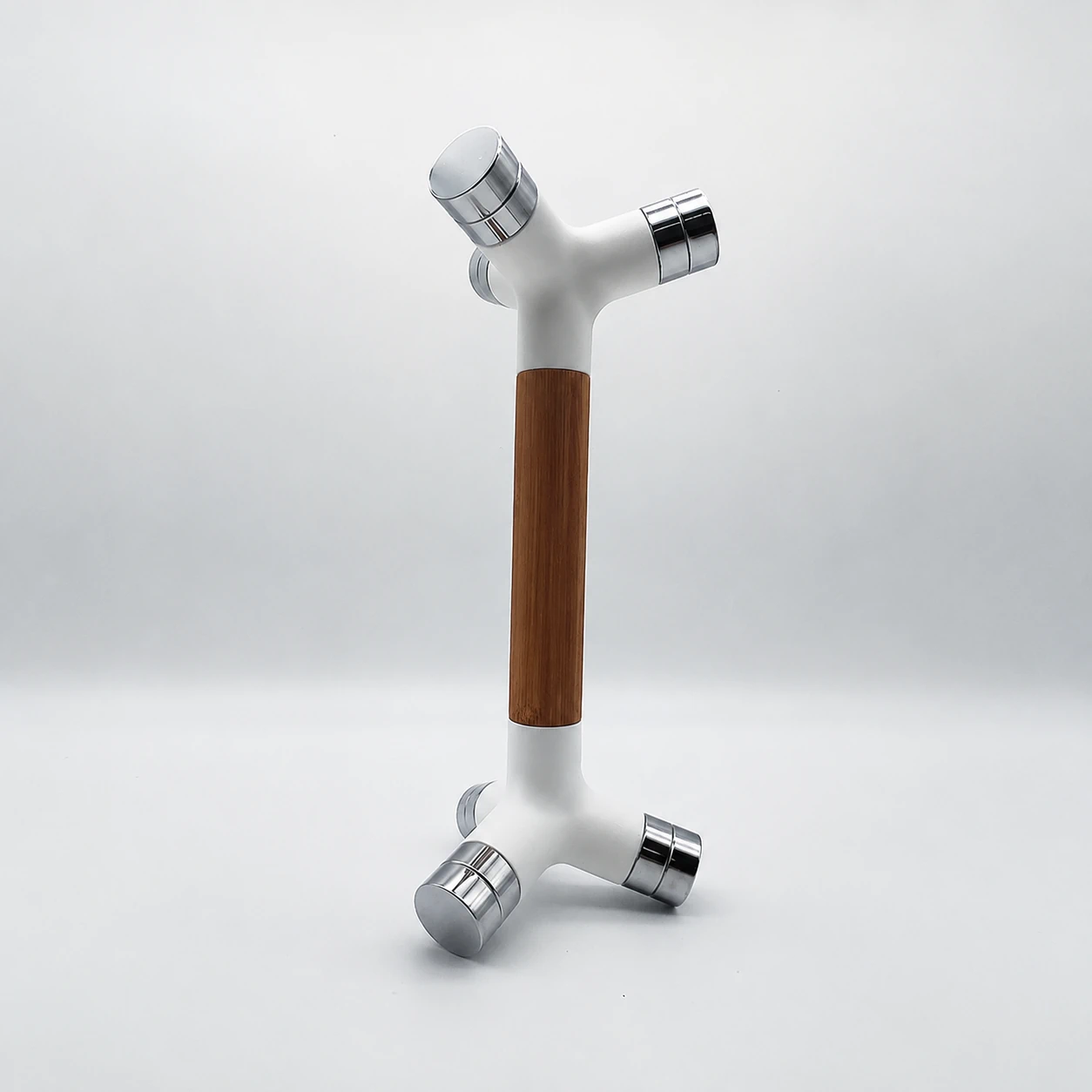


Bamboo Dumbbell translates modularity into an adaptable fitness object: a natural grip, branching aluminium bodies and adjustable steel weights. Inspired by bamboo growth, its construction becomes a visual language, bringing botanical reference and technical precision into a compact, customisable structure.
