Constructing the Absent
for Al2↵
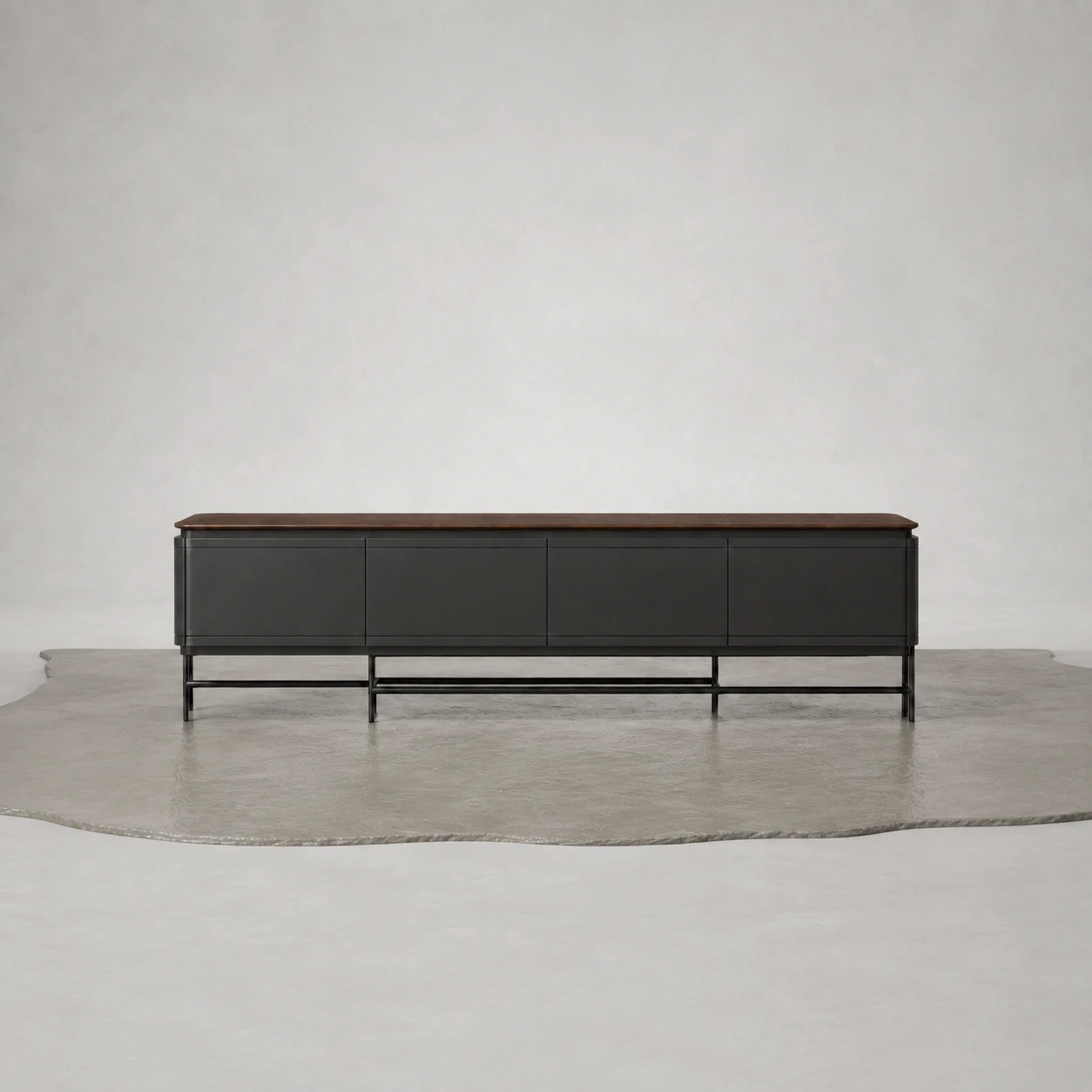
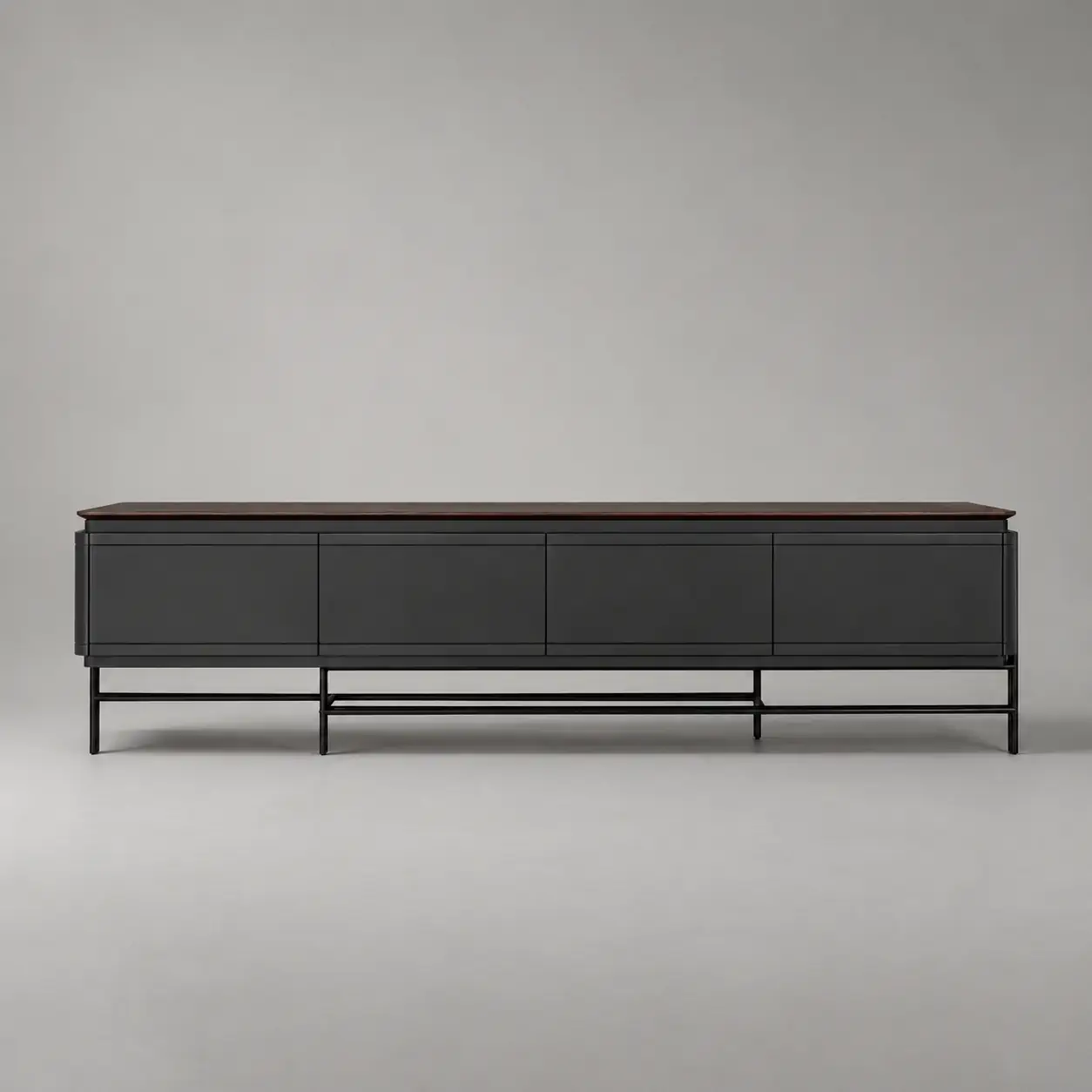
Nihil is a four-door sideboard inspired by exposed-concrete architecture and the reinforcing steel concealed within it. Its orthogonally divided body and double metal base establish a dialogue between monolithic mass, structural expression and perceptual illusion.
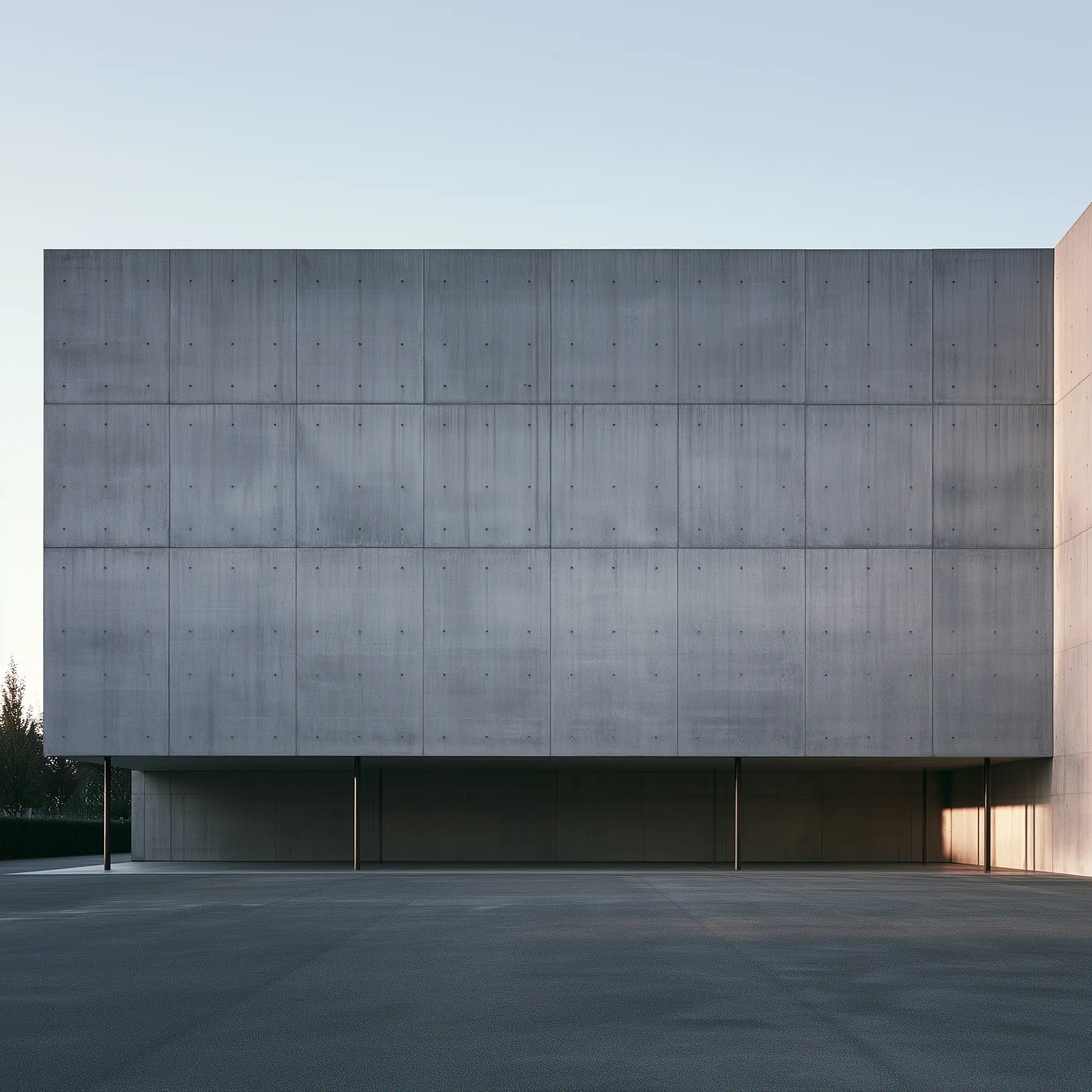
Modernist architecture progressively stripped the building of applied ornament, bringing geometry, proportion and construction to the foreground. In exposed concrete, formwork leaves joints, seams and tie holes that record the process through which the wall was made. In Tadao Ando’s work, these traces become a measured graphic order, while concrete remains simultaneously structure, surface and spatial boundary.
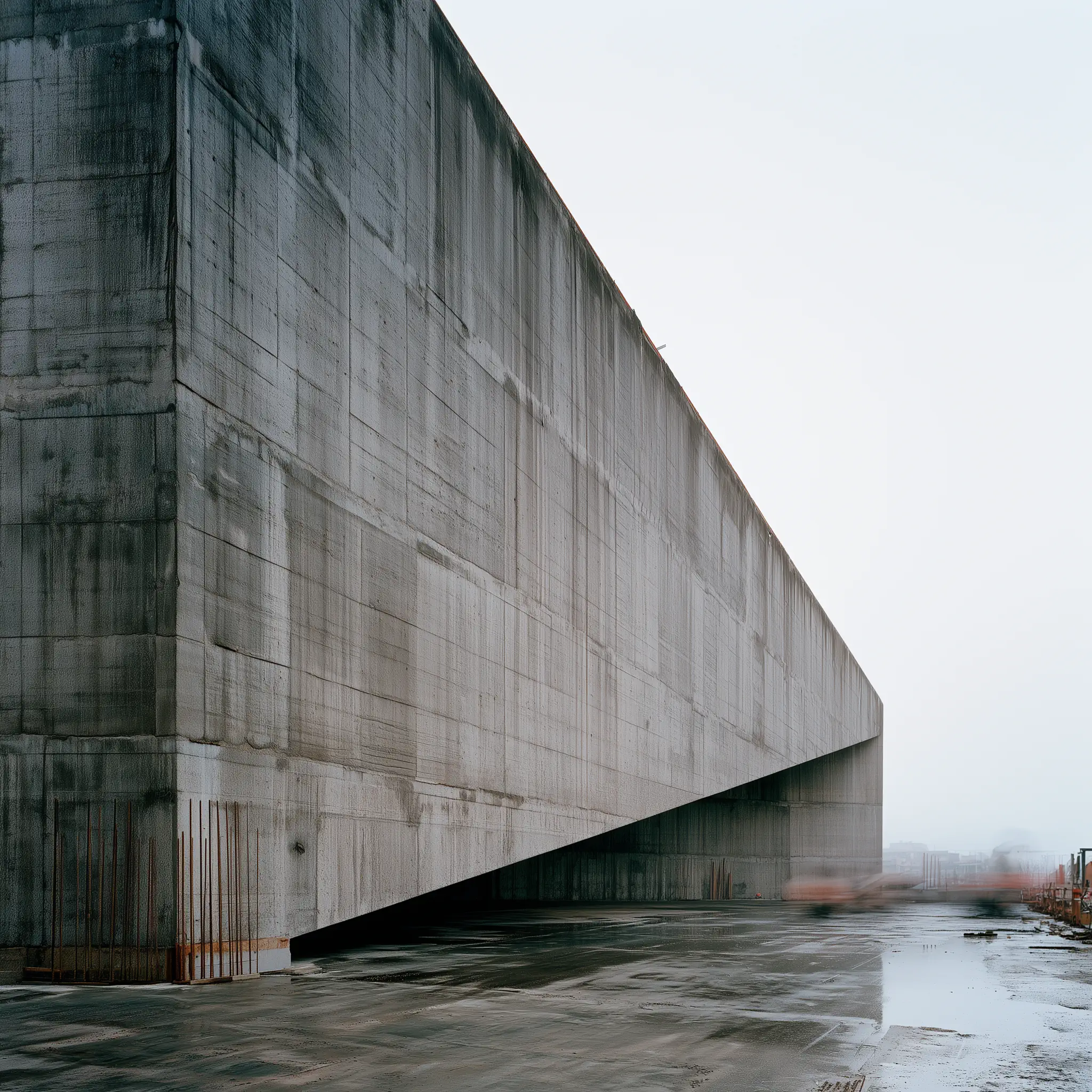
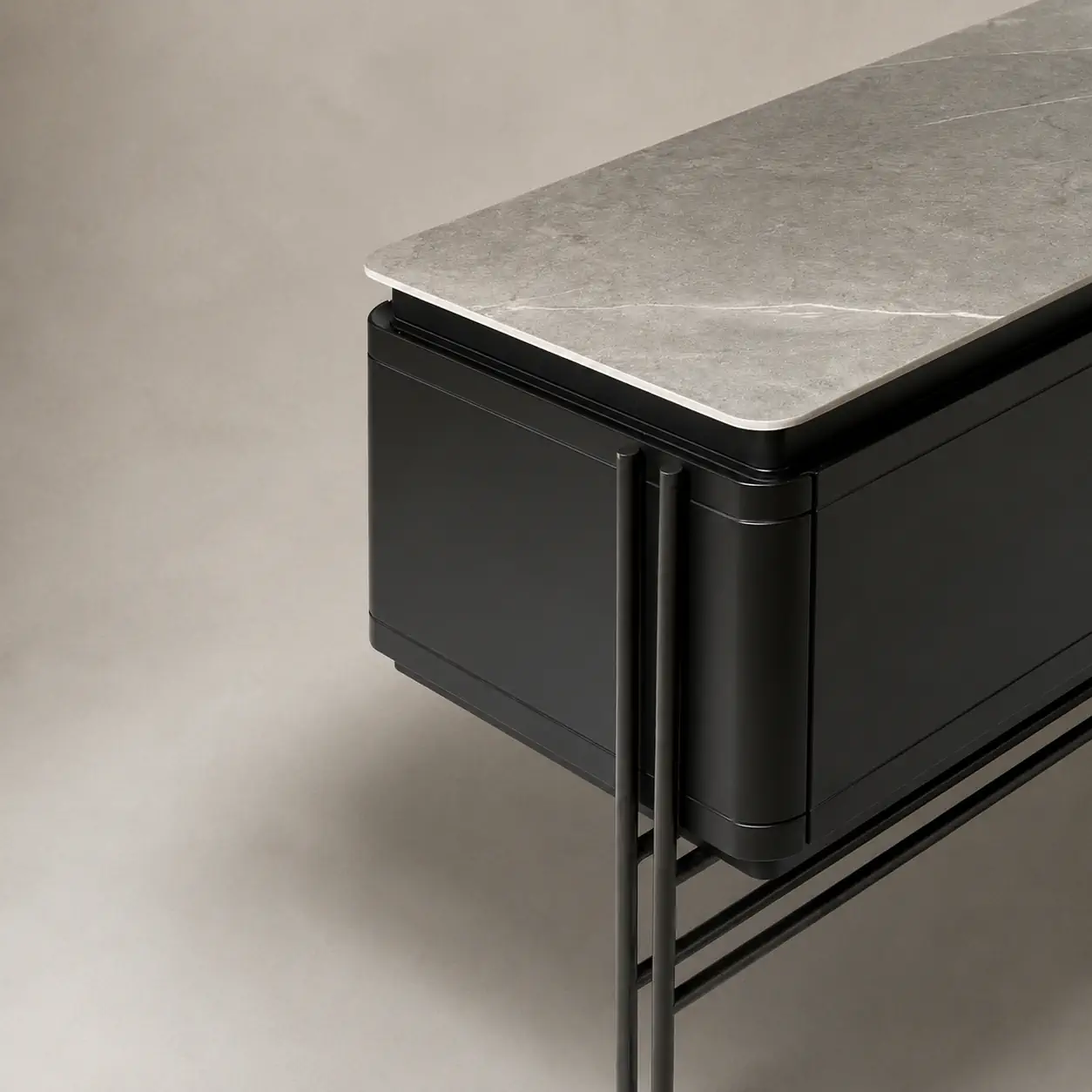
Reinforced concrete combines a compact mineral mass with an internal steel skeleton. While the concrete remains visible, its reinforcement is normally concealed, acting as an invisible system of continuity and resistance. Once separated from the mass, the rods become a drawing in space, defining transparent geometries and axonometric figures without enclosing them. Structure can therefore suggest volumes that exist only through perception.


Nihil translates this relationship between monolith and armature into a sideboard. Its compact body is divided by orthogonal lines recalling the modular traces of concrete formwork. Around it, the metal rods emerge like an externalized reinforcement cage, forming overlapping frames that shift between real structure and axonometric illusion. From the Latin nihil, “nothing,” the name refers both to matter reduced to its essential presence and to the immaterial volumes that appear between the rods without physically existing.


Nihil is a sideboard with four doors and a lacquered shelf inside each compartment. Its rear repeats the same configuration as the front, while a double metal base extends around and visually embraces the cabinet. The body is available in lacquer, with tops in wood, lacquer, ceramic or marble and an epoxy-powder-coated metal base in different colours. It is produced in lengths of 184, 204, 224 or 244 cm, with a depth of 50 cm and a height of 81 cm.


Nihil interprets the sideboard as an architectural fragment, monolithic in its body yet unstable in its perception. The languages of exposed concrete and reinforcing steel meet through their constructive traces. Matter becomes presence, while structure gives form to what is physically absent.