PLY
BOOK
Bookshelves
Prototype
for Al2
A Structure in Translation
for Al2↵
Ply is a modular and reconfigurable bookshelf built from a single repeatable bent-plywood structural element, which slides horizontally across a minimal modular aluminium frame to generate multiple spatial configurations.
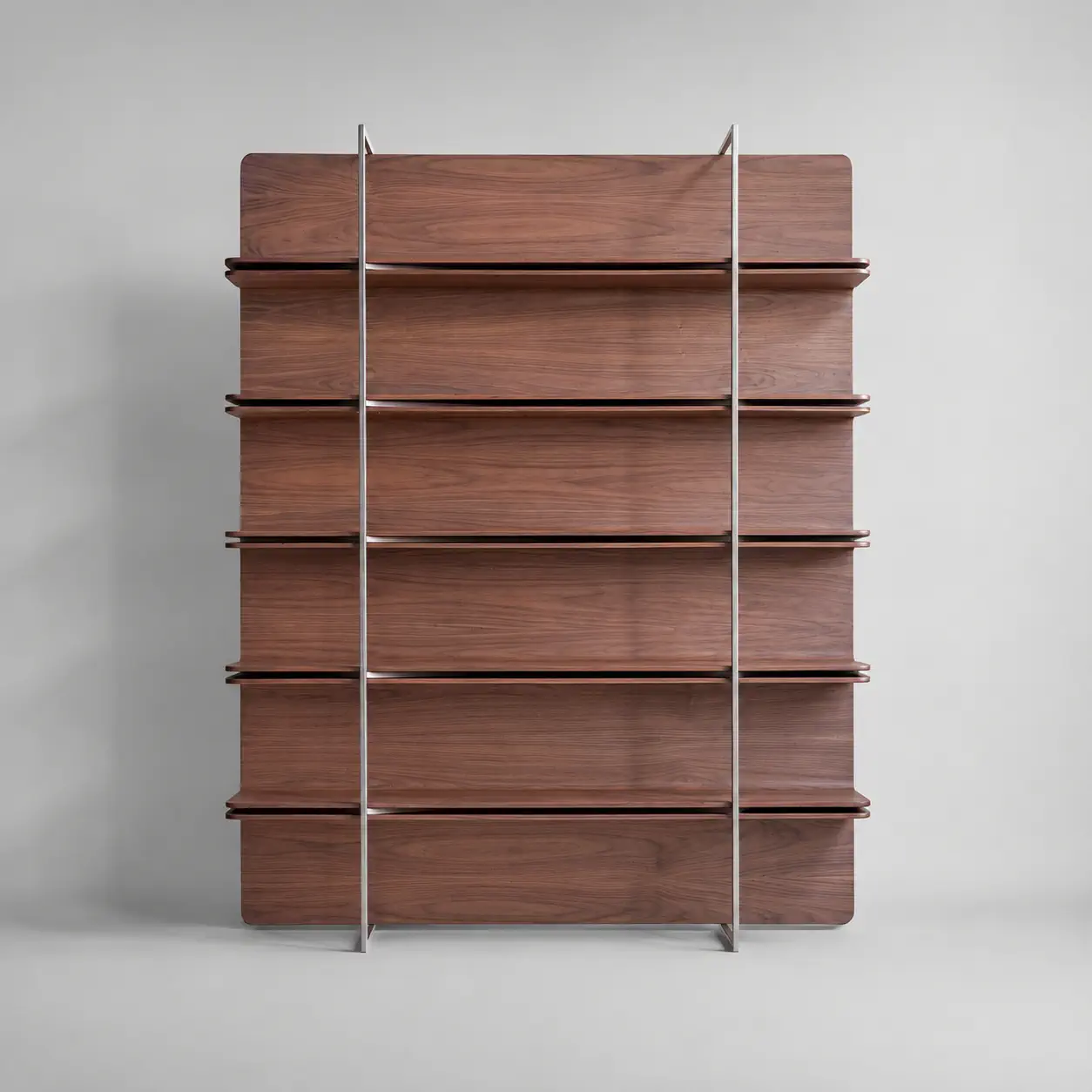
This bookshelf is an experimental modular prototype developed for AL2, exploring the structural limits of bent plywood while preserving the functional requirements of storage furniture. Thin veneers are formed and bonded in a mould to achieve tight radii, control springback and ensure long-term stability. Curvature therefore becomes both a material experiment and a structural principle.
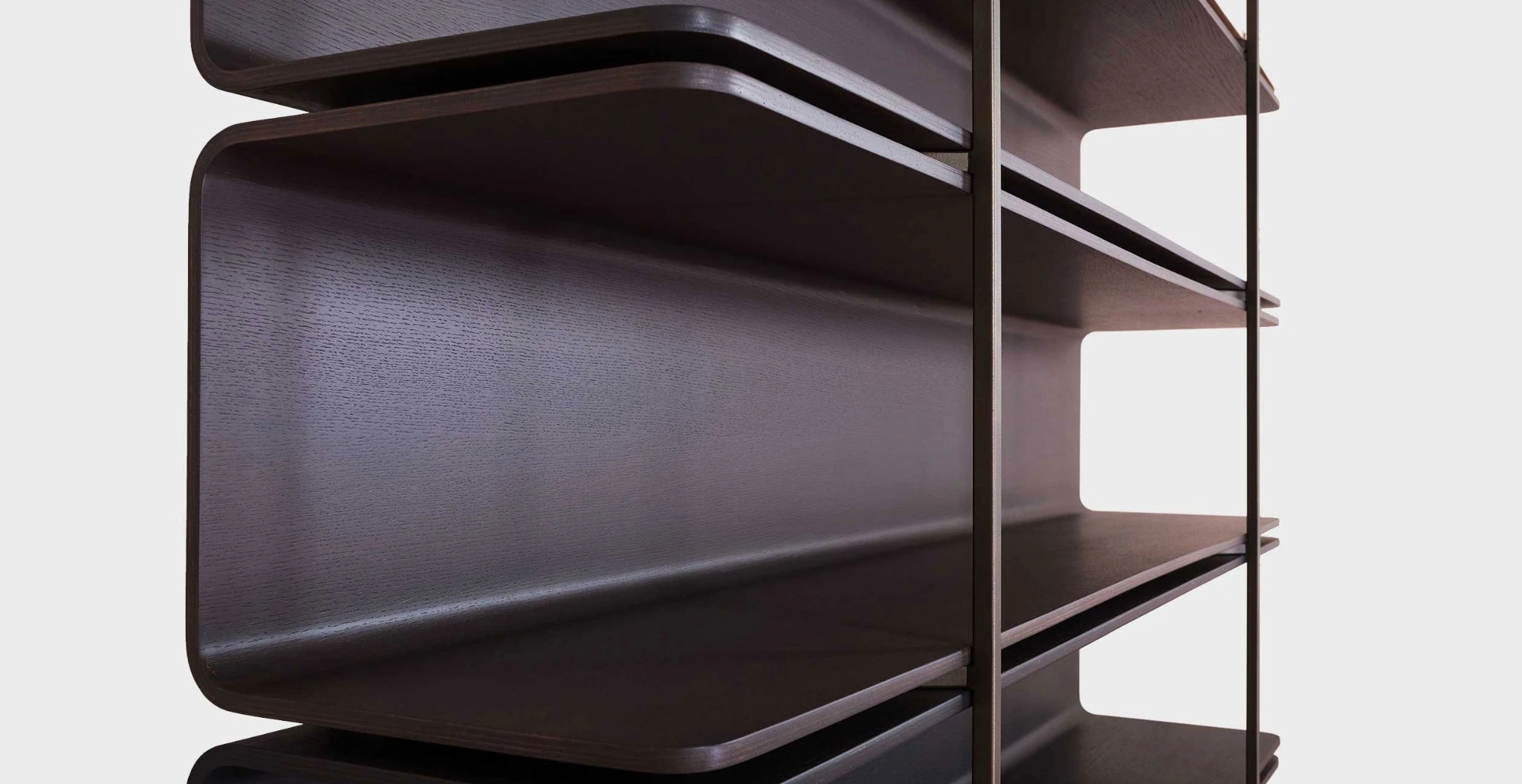
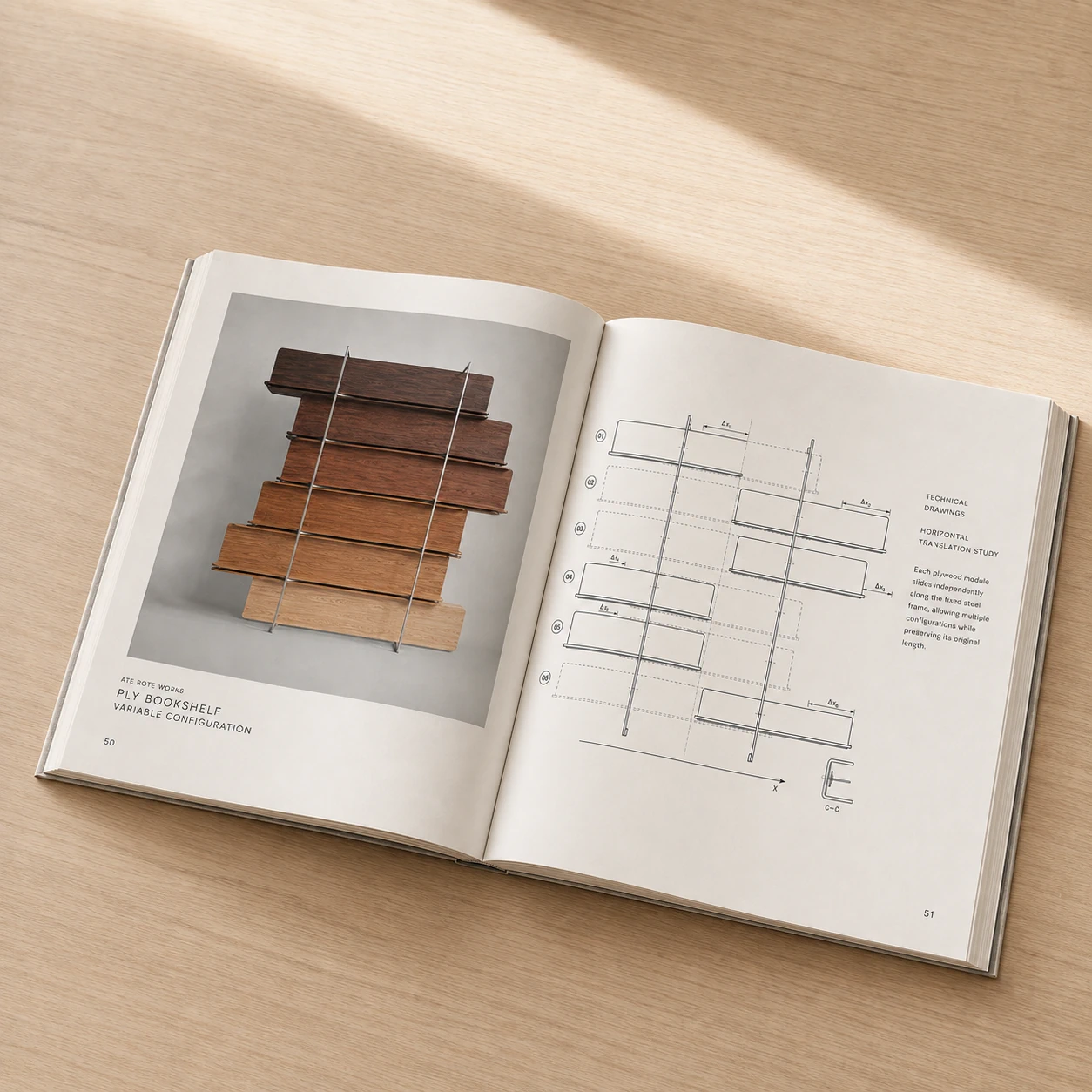
The system is based on a single repeatable plywood element, bent into a continuous C-shaped section. Its horizontal plane supports books, while the vertical return and double fold transform the thin sheet into a rigid structural beam. Shelf, back and support are condensed into one materially efficient component resting on two minimal aluminium uprights.

Each shelf can slide independently to the left or right while remaining supported by the fixed metal crossbars. Different offsets produce asymmetrical projections, overlaps and changing rhythms, allowing the bookshelf to be continually reconfigured. The elements can also be returned to a regular alignment for a quieter and more conventional arrangement.

When several units are placed side by side, their aluminium structures form a wider support system across which the shelves can extend, sharing their weight between adjacent crossbars. Regular and translated elements can coexist, transforming individual bookcases into an expandable modular landscape. Ply continues the Minimal Primitivism developed by Ate Rote for AL2 through elemental forms, structural clarity and mutable use.

Ply interprets the bookshelf as a mutable structural system, elemental in its construction yet variable in its configurations. Bent plywood and aluminium meet through a logic of support, repetition and movement. The fold gives strength to the material, while translation transforms structure into an open field of possibilities.
