Tessellated Resonances
for Al2↵
Tessera is a dining table that reinterprets Byzantine architectural details through a monumental, tessellated plywood base.
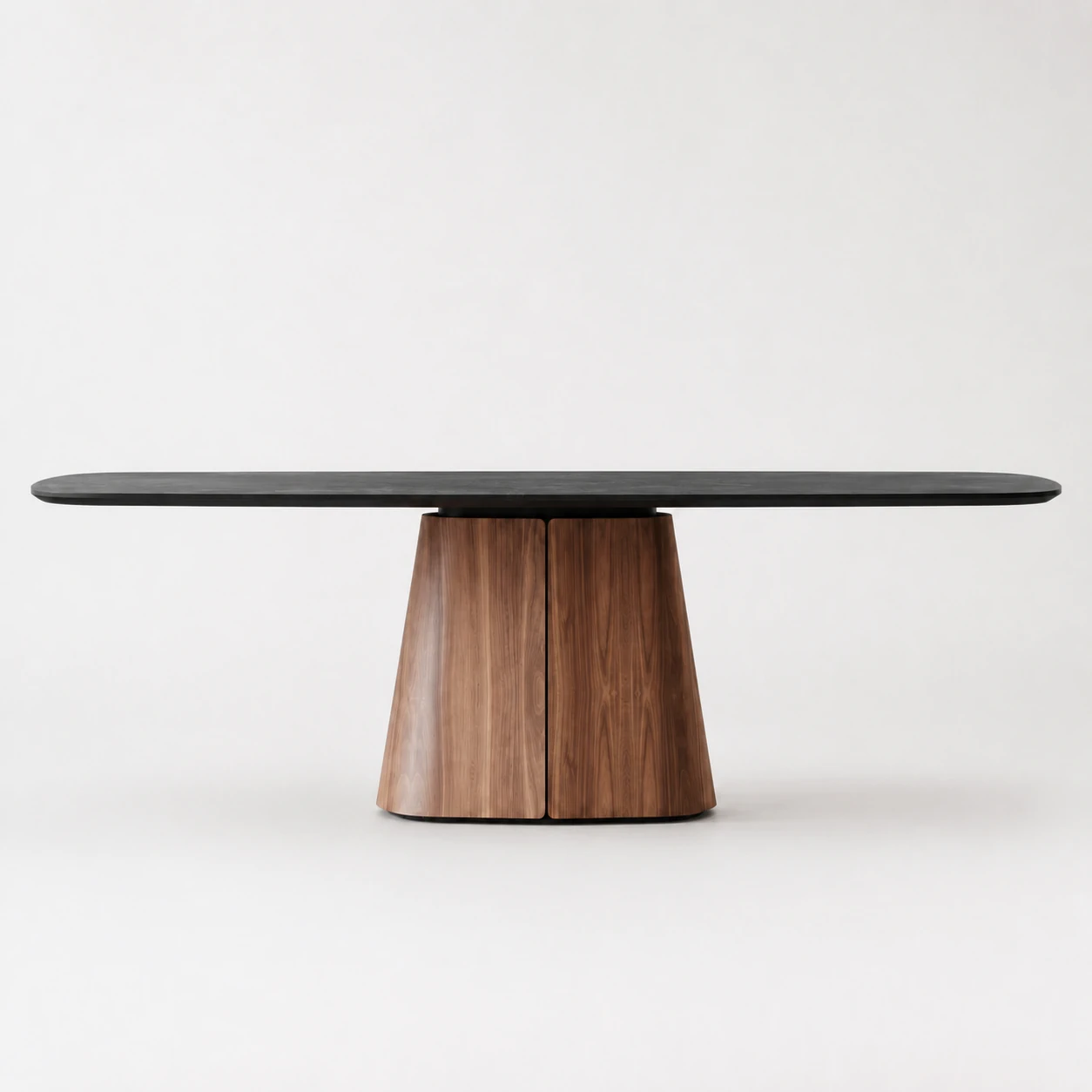

In Byzantine architecture, the Classical capital was transformed to mediate between the circular column and the square impost of an arch. Basket capitals and pulvini adopted inverted truncated-pyramidal forms, combining structural clarity with intricate vegetal carving. This Greek–Roman language was reinterpreted by the Eastern Empire and later transmitted to medieval Europe.
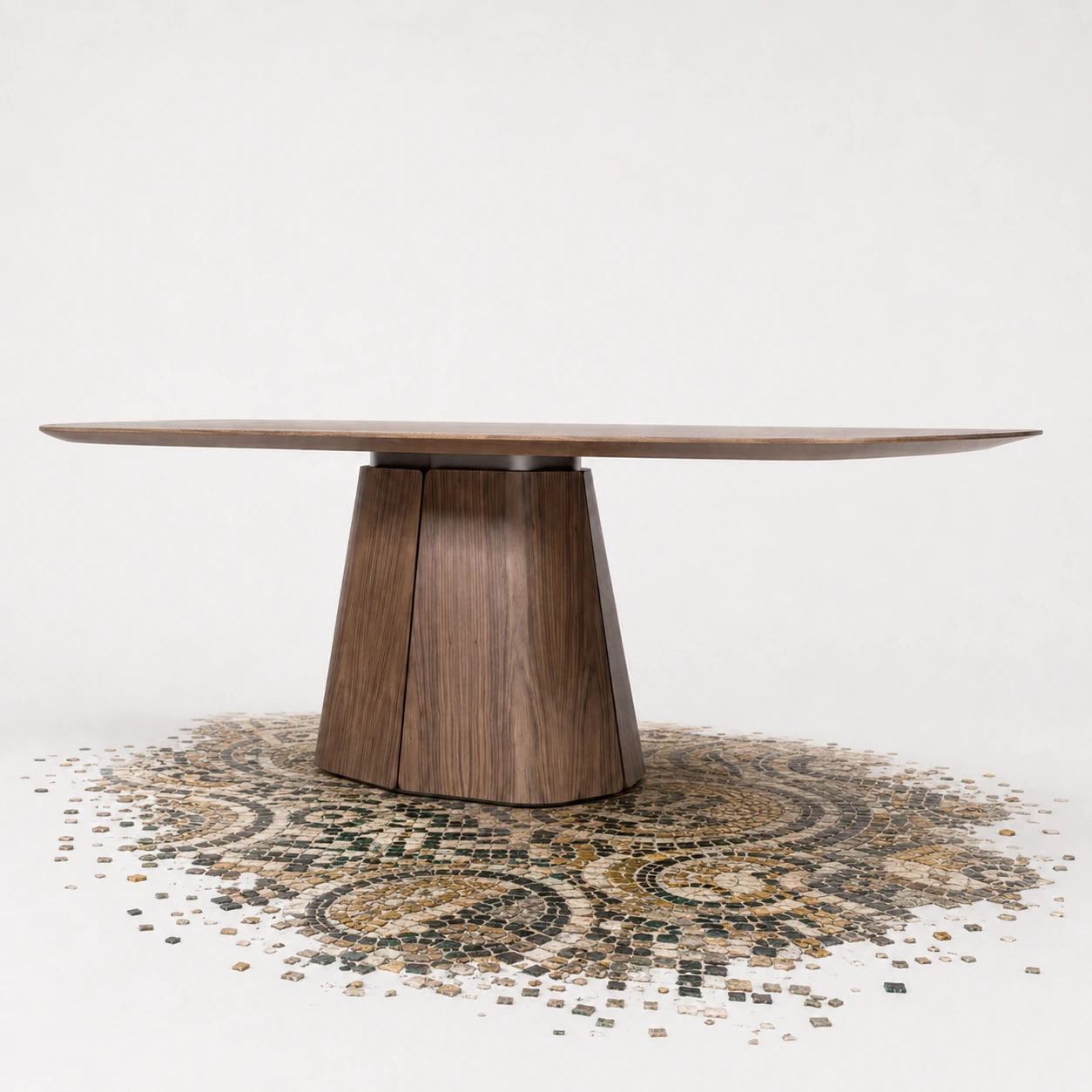

San Vitale in Ravenna and San Marco in Venice preserve outstanding expressions of this Byzantine legacy, where capitals, pulvini and mosaics form a unified architectural language. The tessera—the small modular unit of mosaic—turns fragmentation into monumental imagery, particularly in the magnificent surfaces of these two basilicas.


Tessera Table evolves the combined geometry of the Byzantine basket capital and pulvino, reversing their truncated-pyramidal form to support a top conceived as a contemporary entablature rather than an arch impost. Four bent-plywood faces meet along the cardinal axes to create its tessellated base: hence Tessera, evoking both fourfold construction and mosaic modularity. A Greco-Roman architectural archetype thus passes through Byzantium into a minimalist yet monumental contemporary altar.

This architectural principle is translated into a precise construction: four curved plywood panels converge to form a stable, sculptural base.
The top is realized in wood, lacquer, ceramic or marble, allowing material continuity or deliberate contrast with the base.
Produced in six lengths from 180 to 280 cm, with a consistent height of 75 cm, Tessera adapts to different dining environments.
Its modular construction and extensive range of finishes balance technical versatility with a smooth monumental presence.
