A Ritual made of Wood
for Al2↵
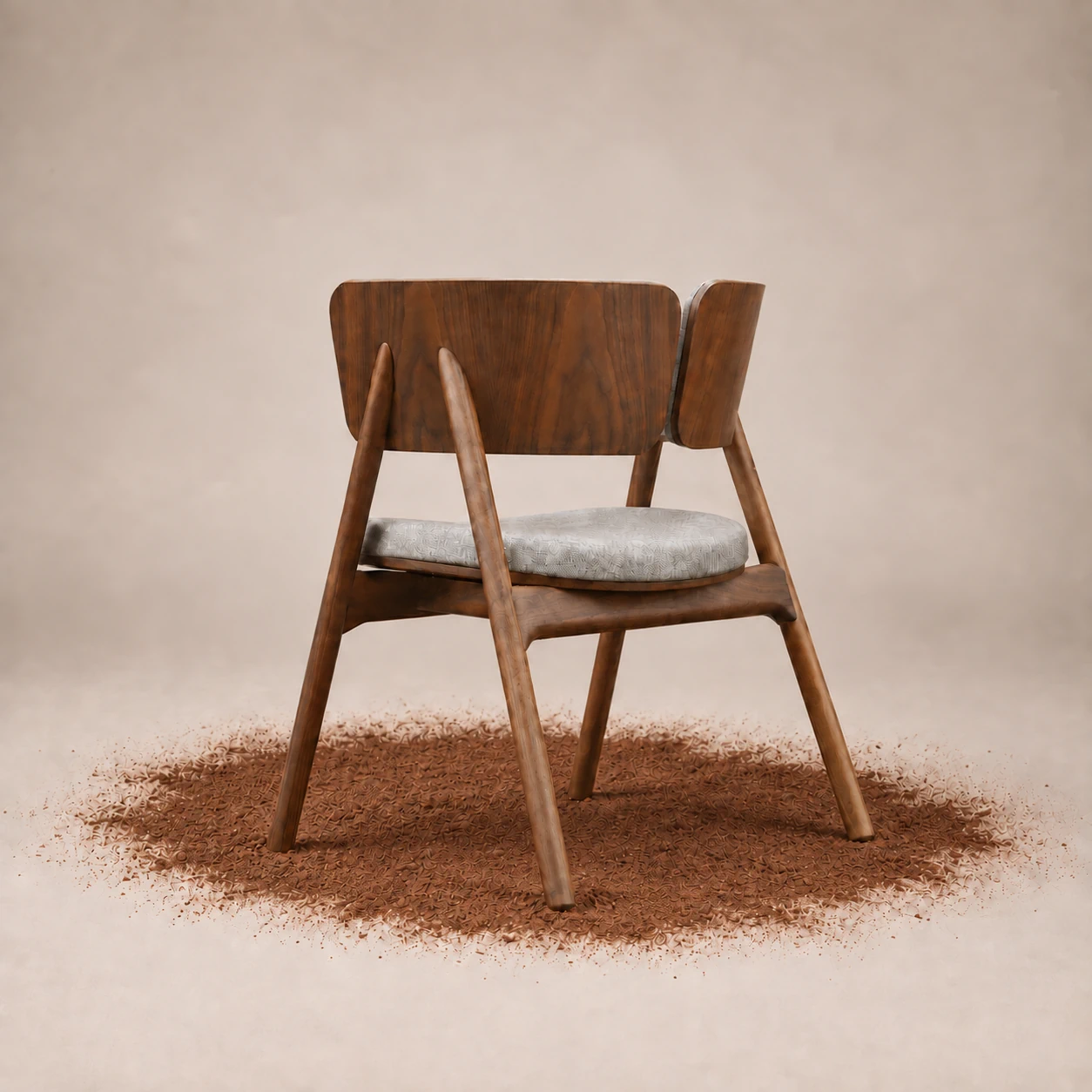
Balancing contemporary sophistication and primordial expression, Wood-oo combines CNC-machined solid wood, bent plywood and upholstery. As part of a mystical liturgy of the daily life, it asks to be observed and touched within the framework of its living environment’s rituals.
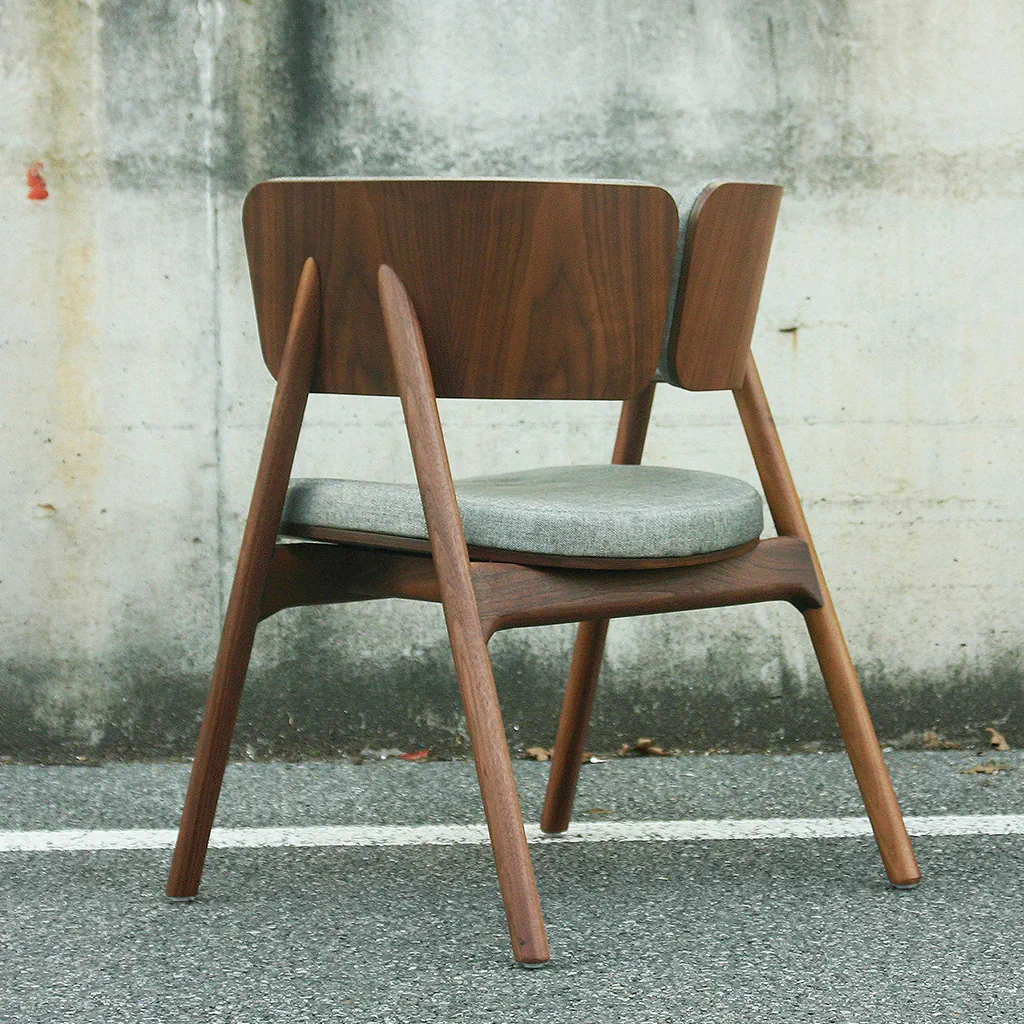
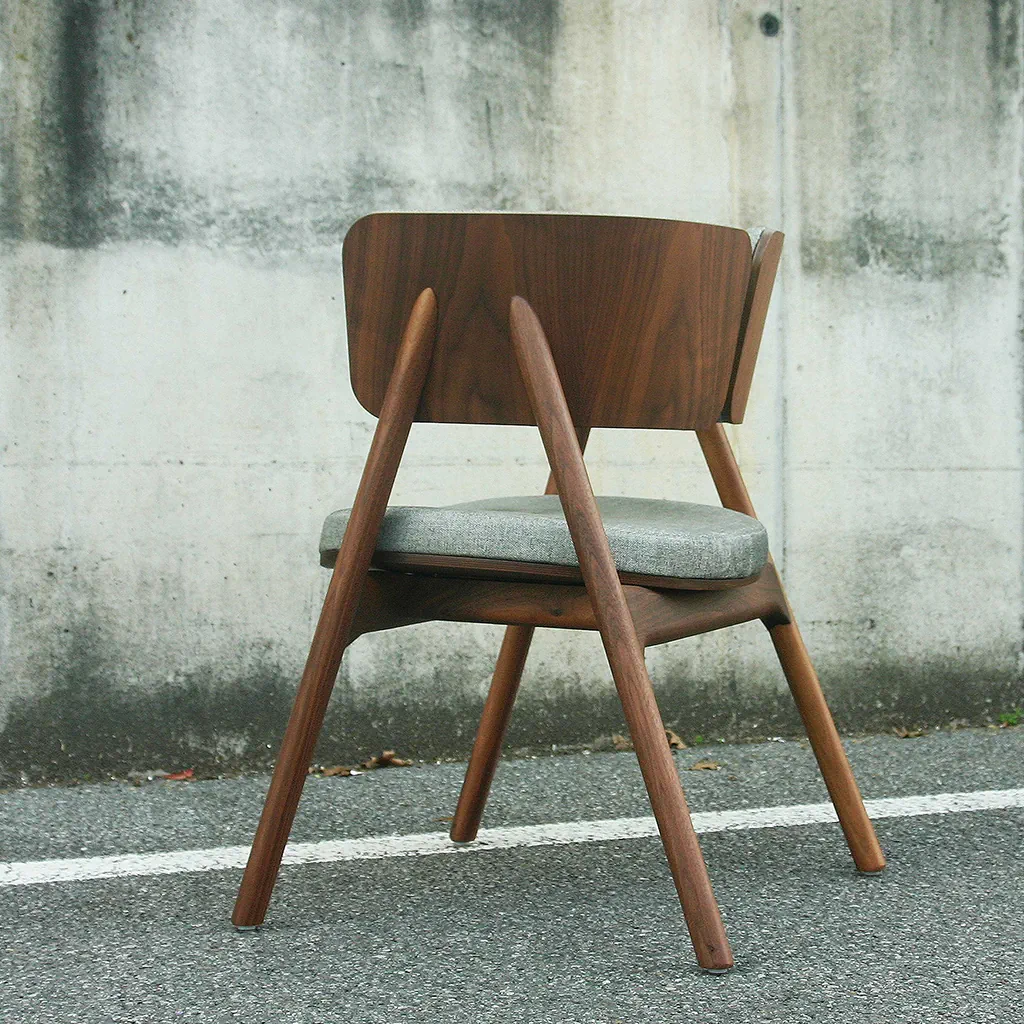
Wood-oo Armchair explores the relationship between contemporary furniture and the protective material culture of West African Vodun. Its name combines wood, the project’s primary material, with a phonetic allusion to Vodun, understood here beyond the reductive imagery of Western “voodoo.” The backrest is formed by two distinct embracing loops: although separated, they are traversed and held in relation by the chair’s wooden posts. These elements perform a structural function by stabilising the composition, while symbolically expressing protection as the act of binding, preserving and keeping separate parts together.
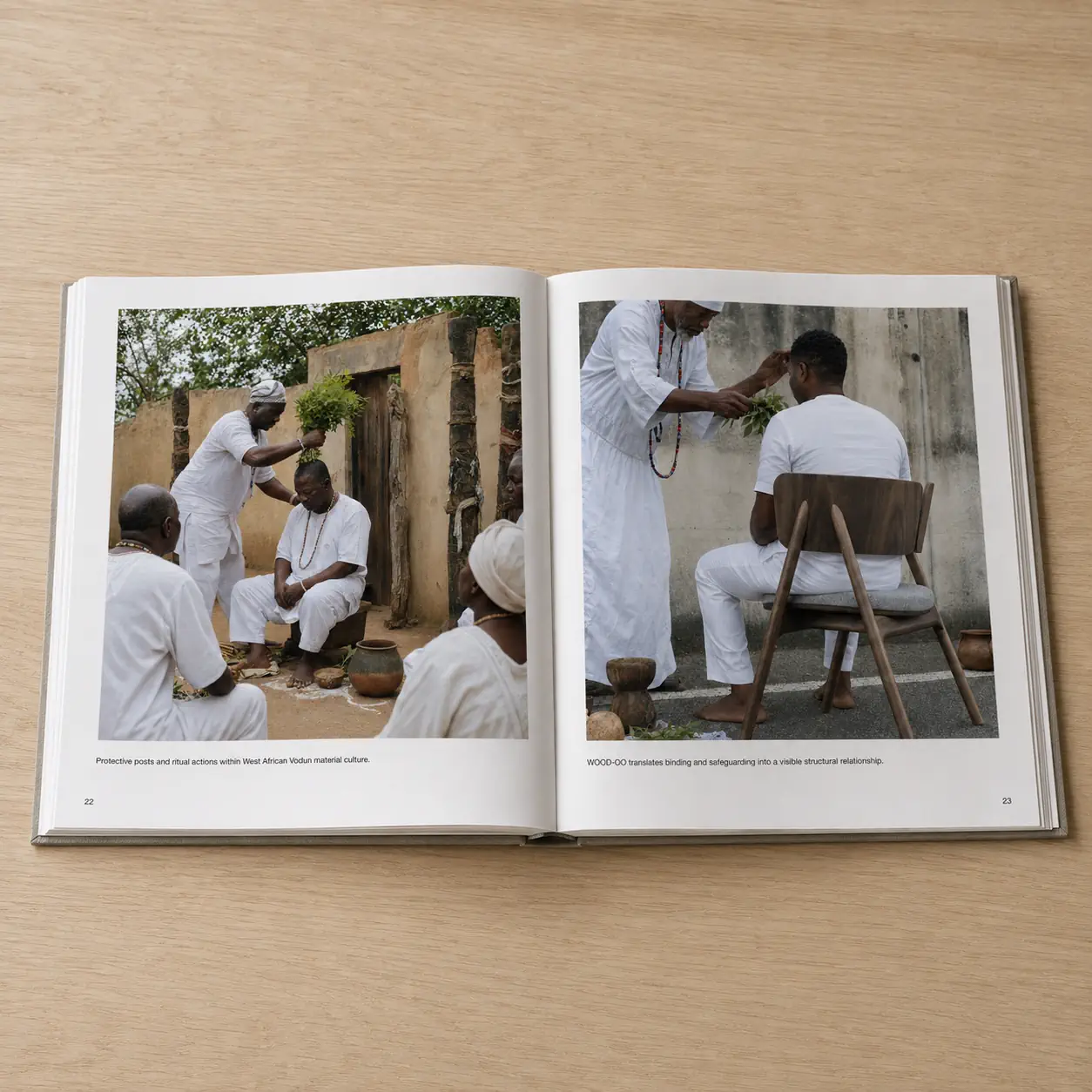
The project draws particularly on the bocio and kudio-bocio associated with Fon Vodun and neighbouring traditions in Benin and Togo. These wooden bodies and elongated figures may be placed near houses, courtyards, entrances or territorial boundaries, where they occupy the threshold between interior and exterior, belonging and estrangement, safety and danger. Rather than functioning as representations alone, they participate in a relational system involving individuals, communities, ancestors, places, substances and ritual actions. Their material presence can therefore embody vigilance, mediation and the safeguarding of an established order.
Within these traditions, binding, wrapping, piercing and material accumulation cannot be reduced to gestures of aggression. They may serve to retain a force, stabilise a relationship, intercept a threat or restore an equilibrium that has been disturbed. Some kudio-bocio can be interpreted as protective substitutes: bodies capable of receiving or diverting what might otherwise affect a person or community. Wood-oo does not reproduce these sacred objects or claim their ritual efficacy; it translates their underlying relational principle into morphology, interpreting protection as a material act of traversing, holding and preserving.


Technically, Wood-oo Armchair combines the comfort and enveloping quality of an upholstered armchair with the visible construction and material presence of a wooden chair. CNC machining allows the solid-wood components to acquire their precise profiles and intersections, while bent plywood contributes to the continuity of the two embracing sections forming the seat and backrest. The wooden posts pass through the upholstered volumes, making the connection between the chair’s parts deliberately legible. Produced by AL2 in a range of wood, lacquer and textile finishes, the armchair uses manufacturing technology to articulate a structure in which support, enclosure and assembly remain visually distinct.

WOOD-OO translates selected characteristics of the kudio-bocio into a design system: separate embracing forms, traversing wooden posts and a structure conceived to hold, protect and preserve. The cultural reference is therefore expressed through morphology and construction. The armchair becomes a safeguarded body in which structural continuity is achieved without erasing the distinction between its parts.